Warehouses are at the center of modern supply chains. As order volumes grow and delivery expectations rise, even small inefficiencies can lead to delays, higher labor costs, and underused storage space.
That’s why many logistics and operations teams are focusing on warehouse optimization efforts. Improving warehouse layout, increasing space utilization, and optimizing workflows can help facilities run more efficiently while keeping operational costs under control.
Fortunately, successful warehouse optimization doesn’t always require major changes. Targeted improvements in processes, software solutions, and storage strategies can significantly improve performance.
In this article, we’ll look at 10 practical strategies to optimize warehouse operations, improve inventory management, and boost overall efficiency.
- Travel time drives picking costs. It can account for up to 50% of order picking time, making warehouse layout optimization one of the fastest ways to improve efficiency.
- Vertical storage unlocks unused capacity. High-rack systems and mezzanines can increase storage capacity by up to 40% without expanding the warehouse.
- SKU velocity should guide product placement. Fast-moving items stored closer to picking areas reduce travel time and speed up fulfillment.
- Automation boosts productivity and safety. Warehouse automation can increase productivity by up to 35% while reducing workplace injuries.
- Data reveals hidden bottlenecks. Metrics like picking time, dock congestion, and order cycle time help identify where warehouse processes slow down.
Optimize your warehouse layout
A well-designed warehouse layout makes it easier for goods and workers to move efficiently through the facility. Warehouse layout optimization organizes storage areas and workflows so goods move through the warehouse with fewer delays.
The goal is to reduce unnecessary movement, maximize space utilization, and prevent bottlenecks.
One of the most effective steps is reducing travel distances. In many facilities, workers spend a large portion of their shift walking between locations. Travel time alone can account for up to half of total picking time.
Ways to reduce travel time:
- Place high-demand SKUs closer to packing and shipping areas
- Store fast-moving products in easily accessible locations
- Keep slow-moving inventory further from main picking routes
Clearly defined operational zones are essential for optimizing warehouse space and making efficient use of the warehouse footprint. Your warehouse layout should separate key areas such as:
- Receiving – unloading and inspection
- Storage – pallet racks and bulk storage
- Picking – order picking locations
- Packing – order consolidation and packing
- Shipping – staging and outbound loading
Well-defined zones improve product flow, reduce congestion, and help eliminate wasted space.
Cross-docking can also improve warehouse flow for certain products. It allows incoming goods to move directly from receiving to shipping without long-term storage. This reduces handling steps, saves valuable warehouse space, and speeds up outbound shipments.
Even small layout adjustments can improve productivity. Minor changes to product placement or workflow paths can significantly support efficient warehouse operations.
Improve warehouse space utilization with vertical storage
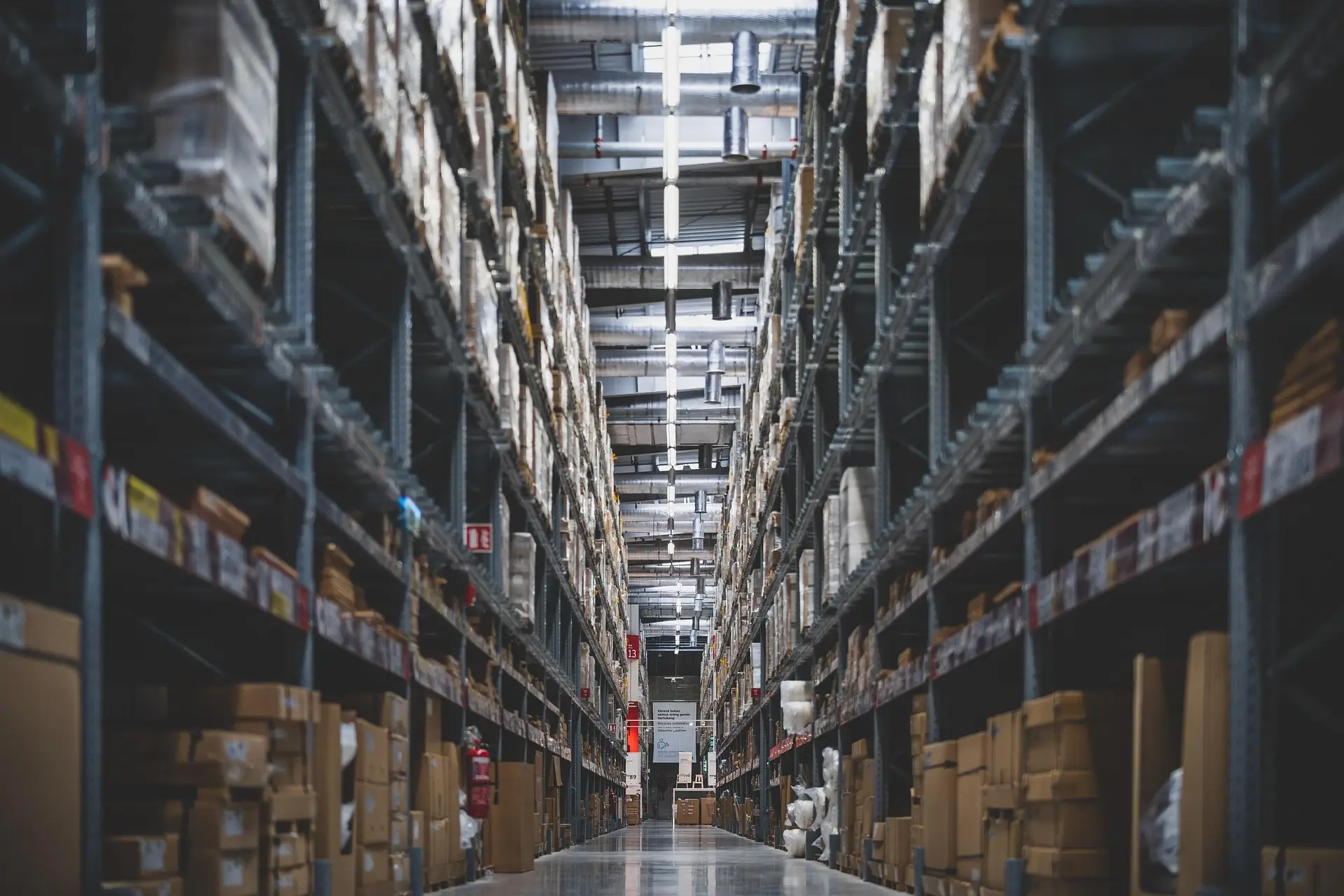
Many warehouses focus on floor space but overlook the valuable storage space available above it. In fact, vertical racking can increase storage capacity by up to 40%, making it a key strategy for storage optimization.
Instead of expanding the building or investing in additional storage facilities, companies can use vertical space to store more inventory within the same warehouse footprint.
Common vertical storage solutions include:
- High-rack systems that allow pallets to be stored at greater heights
- Mezzanines that create additional storage or work levels above the floor
- Automated storage and retrieval systems that store and retrieve items using lifts or shuttles
Vertical storage allows warehouses to store more inventory without expanding the facility or sacrificing valuable space.
Key benefits include:
- Higher storage capacity without expanding the facility
- Better vertical space utilization across the warehouse
- Lower real estate and expansion costs
Well-planned vertical storage also improves organization and accessibility. This helps warehouses store more products while maintaining efficient picking and replenishment workflows.
Implement a warehouse management system (WMS)
A robust warehouse management system is essential for modern warehouse operations. It strengthens inventory management by providing real-time visibility into stock levels, orders, and daily warehouse activity.
With accurate, real-time data, warehouse teams can:
- See exactly where each item is stored
- Monitor real-time stock levels
- Reduce stock discrepancies and manual checks
This visibility helps teams make faster decisions and reduce inventory errors, supporting overall warehouse performance.
A WMS also enhances order tracking and fulfillment. Warehouse managers can track orders from receiving to shipping, which helps:
- Prioritize urgent orders
- Reduce picking errors
- Improve order accuracy and customer satisfaction
A warehouse management system optimizes efficiency through smarter picking routes. It can automatically guide workers along the most efficient path through the warehouse. This reduces travel time and helps pickers complete orders faster.
Modern WMS platforms integrate with warehouse equipment and automation systems. This allows equipment to work in sync with warehouse software, including conveyor systems, automated storage and retrieval systems, and robotic picking systems.
By connecting software, inventory data, and automation, a WMS helps warehouses operate more efficiently and scale as demand grows.
Use data analytics to identify bottlenecks
Efficient warehouses use data analytics tools to monitor performance and spot operational bottlenecks. Studies show that 60% of companies use warehouse analytics to improve processes and control operational costs.
Key metrics to analyze include:
- Picking times – how long it takes to pick and complete orders
- Dock congestion – delays at receiving or shipping docks
- Order cycle times – time from order receipt to shipment
- SKU velocity – how quickly specific products move through the warehouse
Tracking these warehouse performance metrics helps identify where delays occur.
For example:
- Long picking times may indicate inefficient picking routes
- Dock congestion may signal scheduling issues or limited dock capacity
- Slow order cycle times may reveal workflow bottlenecks
SKU velocity data is particularly useful for optimizing inventory placement. Fast-moving items should be stored closer to picking and shipping areas, while slower-moving products can be placed further away.
Data analytics helps warehouse managers make informed decisions about layout, inventory placement, and workflow improvements. This makes it easier to identify inefficiencies and improve warehouse performance.
Upgrade your material handling equipment
The right equipment plays a huge part in warehouse efficiency. Outdated or poorly matched equipment can slow operations, increase maintenance costs, and limit throughput.
Upgrading material handling equipment helps move goods faster, reduce manual handling, and support higher order volumes.
Common examples of material handling equipment include:
- Forklifts for pallet transport and storage
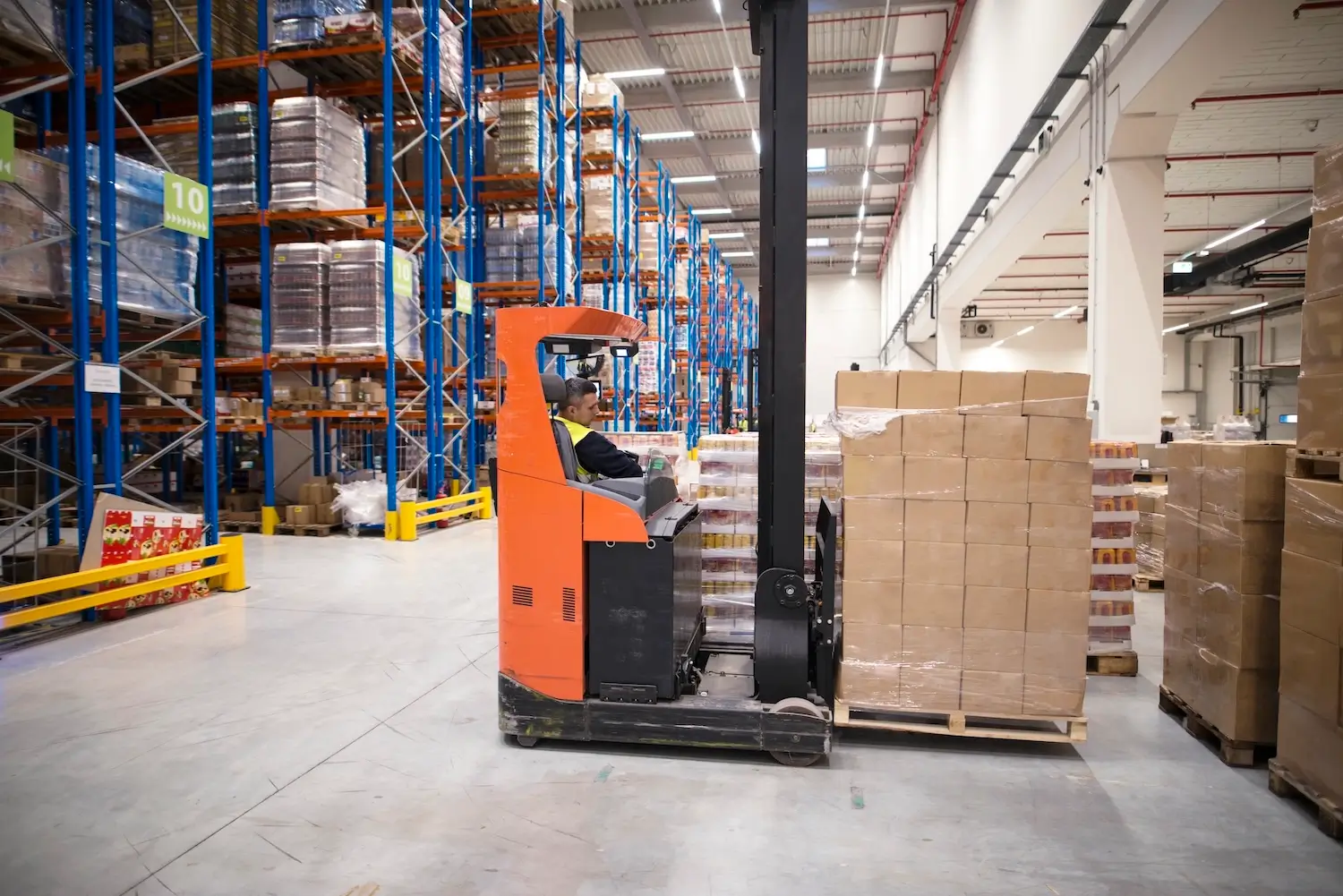
- Reach trucks for handling pallets in high-rack storage systems
- Pallet jacks for short-distance pallet movement in picking or staging areas
- Pallet shuttles for high-density pallet storage systems
- Storage and retrieval cranes used in automated high-bay warehouses
The right equipment should match the warehouse layout, product types, and order volumes. Systems that fit the warehouse workflow help reduce handling time and improve productivity.
Regular maintenance is also essential. Well-maintained equipment reduces downtime, improves safety, and extends the lifespan of warehouse assets.
Upgrading or modernizing material handling equipment can also increase warehouse capacity. Faster transport, better load handling, and improved reliability allow warehouses to process more goods without expanding the facility.
Automate repetitive warehouse processes
Many warehouses still rely on manual labor for repetitive tasks. Warehouse automation helps reduce manual handling, improve operational efficiency, and support better labor management.
Studies show that warehouse automation can increase productivity by around 35% while reducing workplace injuries by up to 25%. Automation works best in processes with high volumes and predictable workflows.
Common examples include:
- Automated conveyors to move goods between warehouse zones
- Robotic picking systems for high-volume order fulfillment
- Automated pallet handling for pallet transport and storage
- Sorting systems that direct products to the correct destination
- Autonomous mobile robots that assist warehouse staff with transport tasks
These technologies reduce manual labor, increase processing speed, and help minimize errors. They also help maintain consistent throughput during peak periods while helping companies reduce costs.
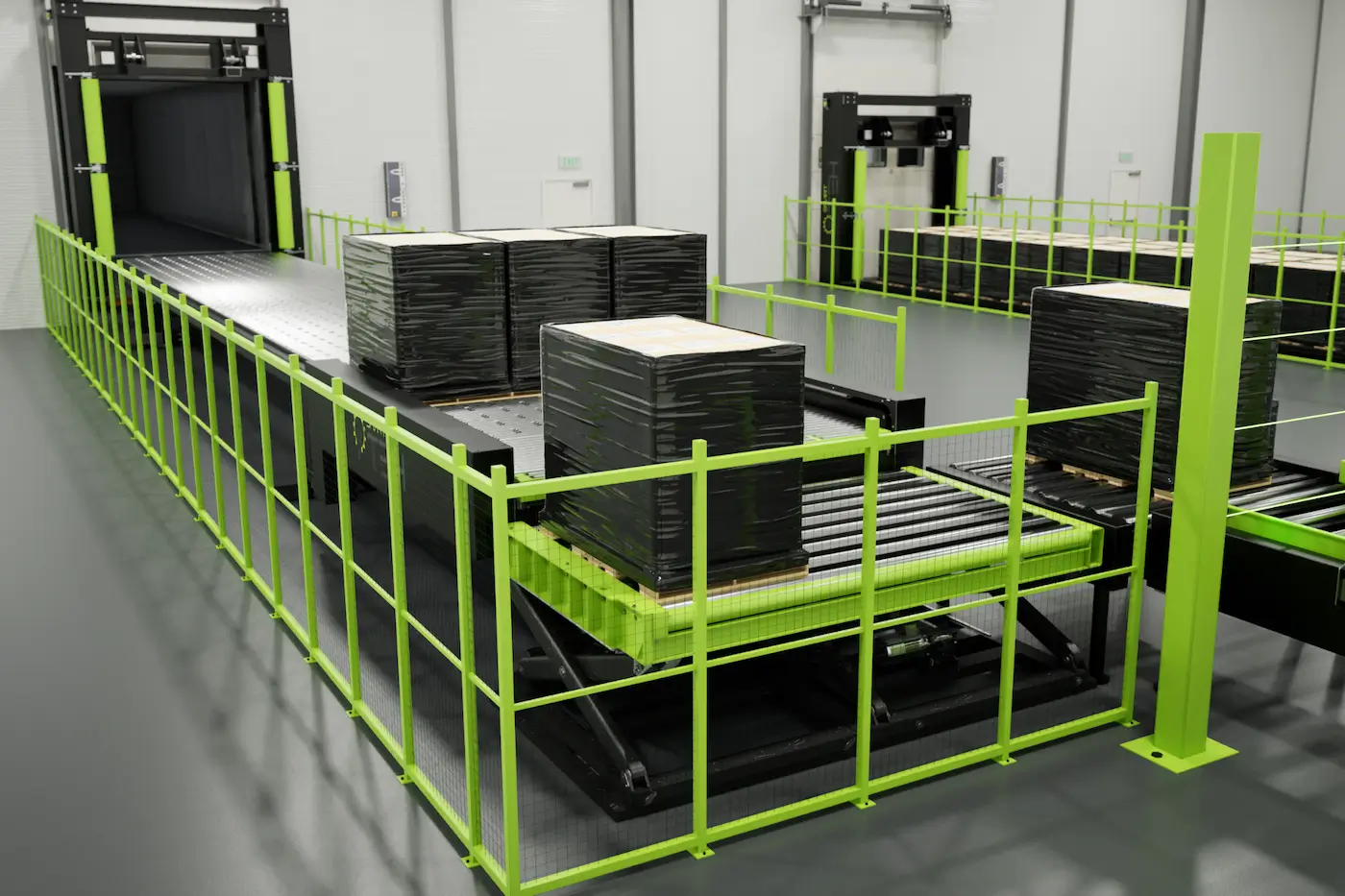
Automating the loading process
The loading process is another area where automation can significantly improve efficiency. In many warehouses, containers and trucks are still loaded manually. This can slow down outbound operations and increase the risk of injuries or cargo damage.
Automated container loaders and truck loading systems can help by:
- Reducing manual handling of goods
- Increasing loading speed
- Lowering the risk of injuries and cargo damage
- Improving loading consistency and use of space
These systems automatically move goods into containers or trailers while maintaining consistent loading times.
Automating routine tasks across the warehouse – including loading – can increase throughput and reduce pressure on warehouse labor.
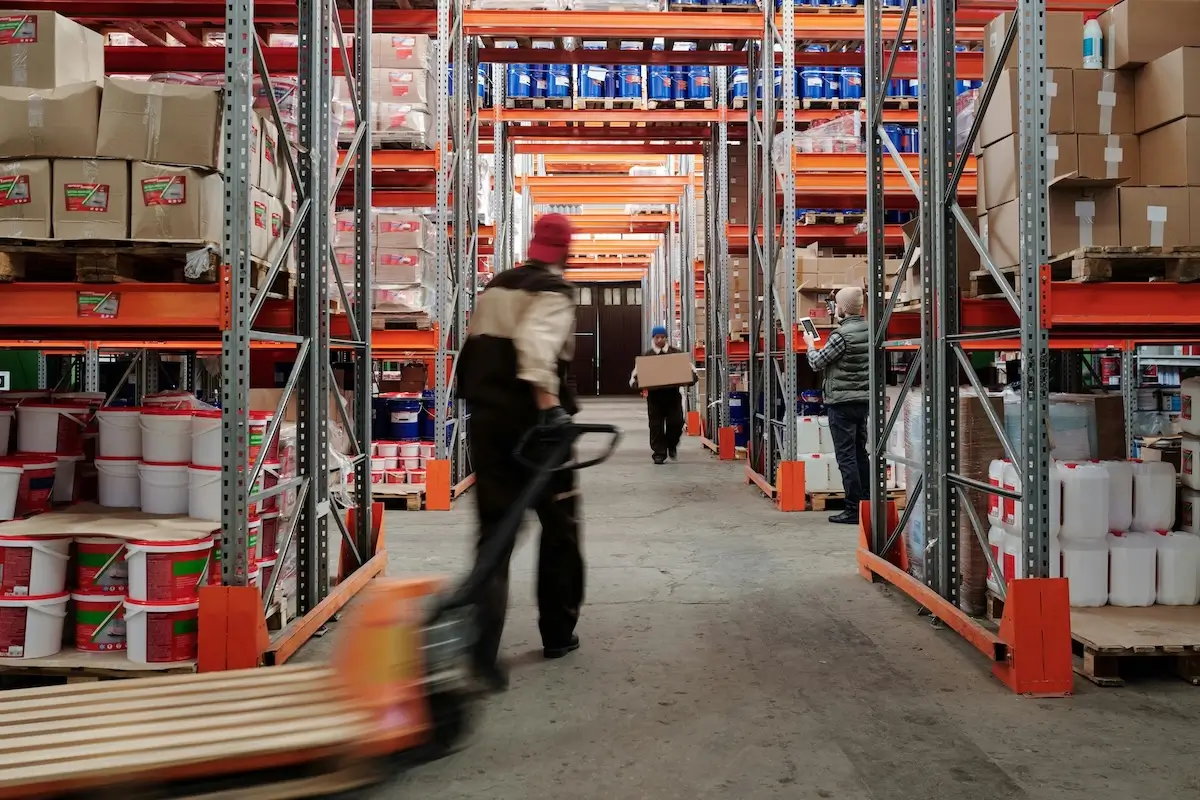
Optimize picking strategies
Order picking is one of the most labor-intensive warehouse activities. In many operations, picking accounts for 50–55% of total warehouse operational costs, making it a major opportunity for cost savings.
Choosing the right picking strategy can significantly improve productivity and reduce unnecessary travel inside the warehouse. Different methods are designed to optimize the picking process for different order profiles and warehouse layouts.
One common approach is batch picking. It allows workers to collect items for multiple orders during a single trip through the warehouse. Instead of completing one order at a time, workers gather items for several orders and sort them later.
Batch picking works well when:
- Orders contain small quantities of items
- Many orders include the same products
- Order volumes are high
Another approach is zone picking. In this method, the warehouse is divided into zones. Each worker picks items within their assigned area, while orders move between zones until all items are collected.
Zone picking is especially useful in:
- Large warehouses
- Operations with high SKU counts
- Facilities with complex layouts
Finally, wave picking organizes picking activities into scheduled waves. Orders are grouped based on factors such as shipping deadlines, carrier schedules, or order priority. This helps coordinate picking, packing, and shipping, ensuring orders are ready when trucks are scheduled to depart.
The right picking strategy can increase productivity, reduce travel time, and lower overall labor costs.
Improve receiving and shipping operations
Receiving and shipping are critical stages in the supply chain. Inefficient dock operations can slow inventory flow, delay shipments, and increase truck waiting times. Studies show that 18% of trucks wait more than two hours at warehouses, while over half wait between one and two hours.
Dock scheduling is one of the most effective ways to improve dock efficiency. Scheduling systems help warehouses:
- Assign time slots for inbound and outbound trucks
- Prevent queues at loading docks
- Coordinate arrivals with available labor and equipment
This helps teams prepare for incoming shipments and keeps dock operations predictable.
Once trucks arrive, well-organized staging becomes essential. Clearly defined staging areas for inbound and outbound goods help workers quickly identify where products should move next. Organized staging zones reduce confusion and keep goods moving between trucks and storage areas.
Cross-docking is another effective way to speed up warehouse flow. It moves goods directly from receiving to outbound shipping with little or no storage time. This reduces handling steps and speeds up order fulfillment.
Cross-docking is especially useful for:
- Fast-moving products
- Pre-allocated orders
- High-volume distribution environments
Improving outbound loading efficiency also helps reduce delays and keep shipments on schedule. Automated container and truck loading systems can reduce loading times and create more consistent outbound operations.
Well-organized receiving and shipping processes help warehouses move goods faster and maintain reliable supply chain performance.
Strengthen demand forecasting
Accurate demand forecasting helps warehouses plan inventory levels and avoid costly imbalances. When demand is predictable, warehouses can plan operations more effectively across the supply chain.
Forecasting aligns inventory with expected demand, ensuring the right products are available when customers need them.
Without accurate forecasting, warehouses often face two common problems:
- Excess inventory, which increases storage costs and ties up capital
- Stockouts, which delay orders and disrupt fulfillment
Demand forecasting helps prevent these issues by using historical sales data, seasonal trends, and predictive analytics to anticipate future demand. Studies show that better forecasting and planning can reduce inventory levels by 15–30% while maintaining product availability.
Better forecasts also improve inventory turnover and support smarter restocking decisions. For example:
- Fast-moving products can be replenished more frequently
- Seasonal items can be stocked ahead of peak demand
- Slow-moving inventory can be reduced to free up available storage space
Accurate forecasts also improve coordination across the supply chain. Suppliers, warehouses, and distribution teams can plan production, transportation, and inventory levels more effectively.

Continuously monitor and improve warehouse operations
Successful warehouse optimization is not a one-time project. Warehouse operations change constantly as order volumes, product mixes, and customer expectations evolve. To maintain efficiency, warehouses need to monitor performance and adjust processes regularly.
One of the most effective ways to do this is by monitoring key performance indicators (KPIs). Common warehouse KPIs include:
- Order accuracy – percentage of orders shipped without errors
- Order cycle time – time from order placement to shipment
- Picking productivity – orders or lines picked per hour
- Inventory accuracy – how closely recorded inventory matches physical stock
Tracking these metrics helps managers identify problems early and measure the impact of operational improvements. For example:
- Longer cycle times may indicate bottlenecks in picking or packing
- Declining order accuracy may signal training or process issues
- Low inventory accuracy can lead to stockouts or incorrect shipments
Regular performance reviews help teams adjust layouts, workflows, and labor allocation as needed.
Continuous improvement also requires testing new approaches and refining existing processes. Small operational changes – such as adjusting storage locations, modifying picking methods, or improving dock processes – can significantly improve performance over time.
By consistently monitoring KPIs and refining processes, warehouses can maintain operational efficiency and achieve long-term warehouse optimization.
Final thoughts: Building a more efficient warehouse
Warehouse optimization requires improvements across multiple areas of the operation. Layout design, space utilization, picking strategies, demand forecasting, and dock operations all influence how efficiently goods move through a facility.
Focusing on these areas helps warehouses reduce unnecessary movement, improve inventory flow, and increase productivity. Even small adjustments to processes, storage strategies, or workflows can deliver measurable improvements.
Most importantly, optimization should be treated as an ongoing process. By monitoring performance and refining operations over time, companies can maintain efficiency, adapt to changing supply chain demands, and exceed customer expectations.