Global logistics industry trends in 2026: Practical guide for logistics providers
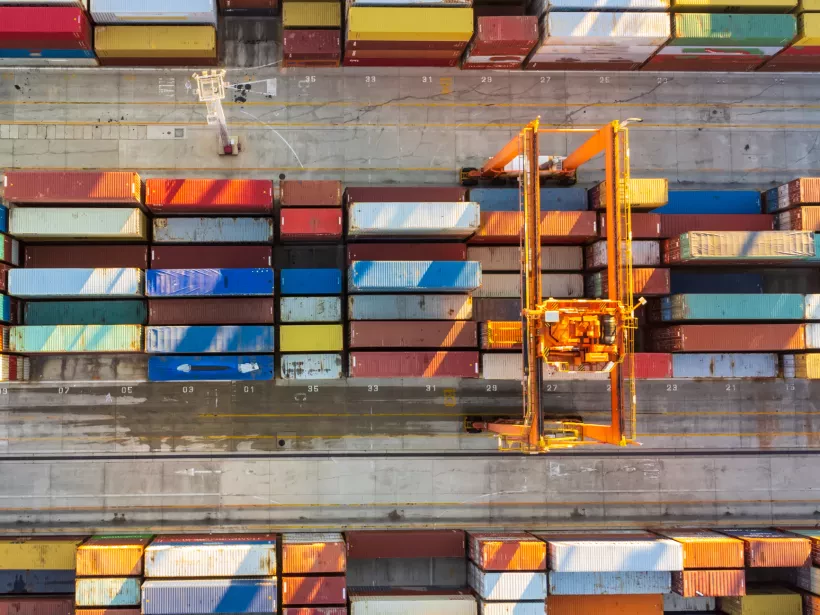
In 2026, the logistics industry isn’t about a single breakthrough or a one-off disruption. It’s about a series of operational shifts that are changing how goods move, are stored, and handled across global markets.
Rising transport costs, unpredictable tariffs, geopolitical tensions, regionalized supply chains, global labor shortages, and stricter sustainability requirements are forcing logistics teams to rethink everyday decisions – from route selection to on-site material handling.
This guide looks at relevant and emerging trends shaping the logistics landscape today and shows what businesses are actually doing to stay ahead.
- Design for resilience, not just cost: Diversifying suppliers, routes, and inventory strategies helps reduce risk and keeps operations running when disruptions hit.
- Move closer to demand: Regional networks, local sourcing, and shorter transport lanes improve responsiveness, cut lead times, and align logistics with shifting customer needs.
- Shift from reactive to predictive logistics: Using forecasting tools and real-time data allows teams to anticipate disruptions, plan capacity earlier, and improve overall supply chain performance.
- Automate the right bottlenecks first: Targeting loading, unloading, and material transfer points delivers faster ROI, reduces manual strain, and keeps goods moving consistently.
- Turn efficiency into sustainability gains: Eliminating wasted movements, optimizing yard flow, and improving asset utilization lowers both operating costs and environmental impact.
Redesigning workflows to handle supply chain disruptions
For years, companies built supply chains around one goal: keep costs as low as possible. That model is getting harder to sustain. Disruptions linked to geopolitics, extreme weather, and infrastructure constraints are happening more often – and hitting harder. Potential business disruption alerts rose about 33% in 2025 compared to 2024.
As a result of these logistics trends, many companies are rethinking how they approach supply chain management and how much risk they’re willing to carry. Instead of relying on a single supplier, route, or region, they’re adding backups, keeping critical stock closer to production, and designing networks that maintain supply chain agility.
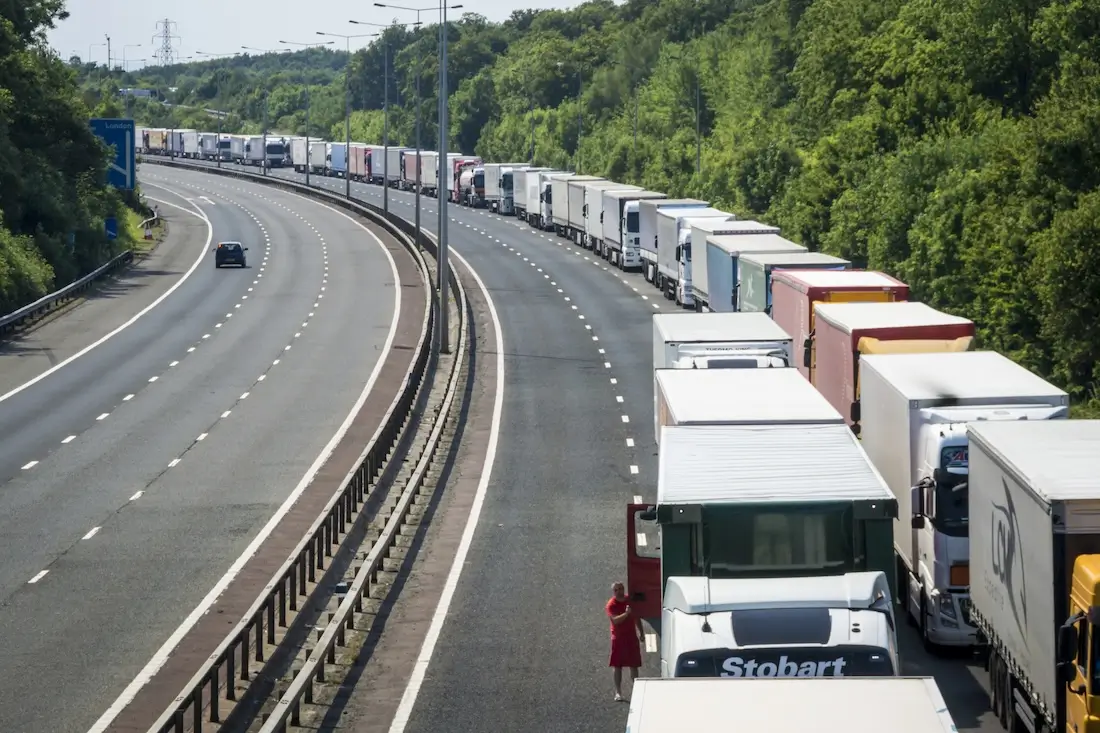
How logistics companies are handling disruptions:
- Adding secondary suppliers in different regions
- Holding strategic buffer inventory closer to production
- Splitting transport flows across multiple ports or corridors
- Stress-testing logistics networks against disruption scenarios
Practical tip: Map your critical material flows and identify where a single delay could halt production. Even modest diversification – an alternate supplier, route, or storage location – can significantly reduce risk.
Closer, faster, smarter: The shift to regional supply chains
Manufacturing and processing are moving closer to end markets to cut risk, shorten lead times, and deal with shifting trade policies. A 2025 study found that 76 % of shippers and 71 % of logistics providers are considering more local or domestic sourcing as part of this shift.
Instead of relying on a single global hub, companies are building regional supply networks that shorten the entire supply chain and make it easier to respond when demand changes. Many logistics providers are expanding their regional service coverage to support this new structure.
How logistics providers thrive regionally:
- Setting up smaller distribution or processing sites closer to customers
- Moving more freight within regions by road, rail, or short-sea routes
- Reducing dependence on long intercontinental shipping cycles
Practical tip: Take a fresh look at whether your business’s supply chain still reflects where your customers actually are. In many cases, regional warehousing or late-stage processing now makes more sense than shipping everything long-distance.
Predictive logistics management as the new industry standard
For a long time, logistics management focused on tracking. Where is the shipment? Has it arrived? Is it late? Now, the bigger question is: What’s going to happen next?
Companies want earlier warnings about delays, congestion, or capacity issues so they can adjust before operations are affected, not after. New planning tools help teams spot patterns, estimate future customer demand swings, and align transport with production and inventory decisions.
Instead of reacting to problems as they appear, logistics teams can start making adjustments days or even weeks earlier, improving supply chain performance.
How logistics operators are adapting to frequent changes:
- Using AI-based demand forecasting to determine expected demand
- Bringing real-time transport, weather, and port data into planning
- Monitoring cargo conditions to prevent loss or damage
- Linking logistics data directly to production scheduling across the supply chain
Practical tip: If your systems only tell you what already happened, they’re not enough anymore. The real value comes from tools that help you act sooner, not just track more accurately, giving better supply chain visibility across operations.
Smart automation for a faster-moving logistics business
Labor shortages, safety rules, and the need to move more goods faster are pushing automation into areas that used to rely on manual work – especially in bulk, industrial, and container handling. Logistics companies are now turning to tech that takes over repetitive, high-risk tasks, so people can focus on more valuable work.
The biggest gains come from automating material movement, not just storage. Around 68% of logistics operators now use automated warehouse systems, and 61% use robotics to make their supply chains more efficient. It’s clear: automation is spreading across all logistics operations.
How logistics teams are implementing automation:
- Automating container stuffing and truck loading to remove manual handling bottlenecks
- Using integrated conveyor and loading systems to connect production directly to outbound logistics
- Designing facilities around continuous flow instead of staged handling
Practical tip: Look closely at your loading and unloading processes. They’re often the least optimized and most labor-intensive parts of the operation. Automating these transfer points can deliver faster ROI than warehouse automation alone.
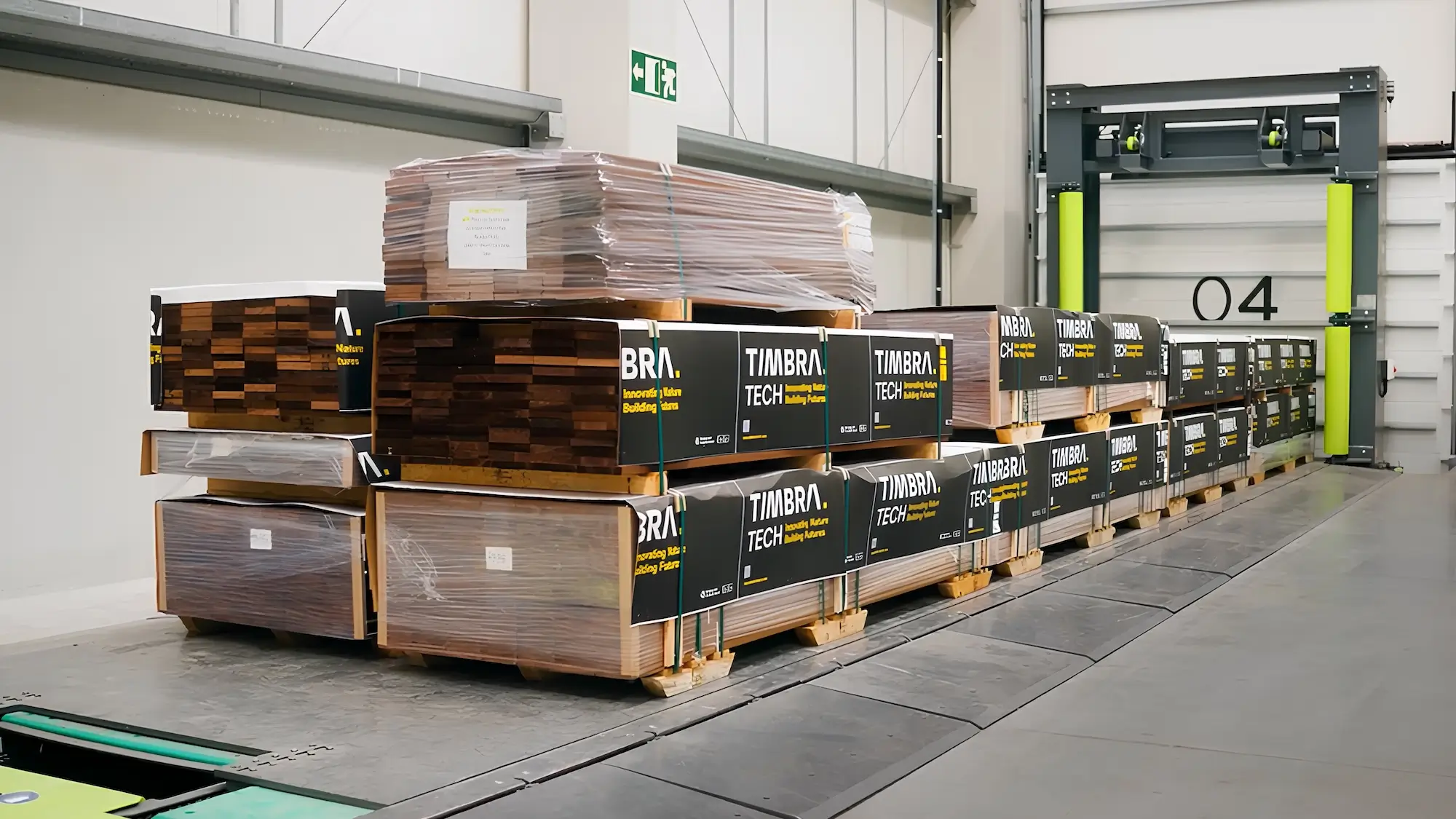
How automated container and truck loading delivers fast operational wins
Warehouse automation can involve large, complex changes. Automated loading, by comparison, is easier to implement and far less disruptive – yet it addresses some of the most persistent bottlenecks in heavy logistics.
Since loading sits between production, warehousing, and transport, even small improvements can create a ripple effect, improving efficiency across the entire operation.
Key loading automation benefits logistics providers are seeing:
- Shorter turnaround times: Moves more trucks per day with less waiting.
- Better labor use: Frees staff for higher-value tasks.
- Safer operations: Reduces injuries and product damage.
- Predictable throughput: Standardized cycles simplify scheduling.

Optimizing yards for better supply chain management
For years, yards were treated as just a waiting area – a place where trucks parked, and materials paused between transport and the warehouse. But that “in-between” space is often where the largest inefficiencies hide – idle trucks, lost materials, and unexpected delays that disrupt all supply chain operations.
Companies are now managing yards like they manage production or warehouses. They use data, scheduling, and automation to turn it from a buffer area into a coordinated flow environment.
How logistics providers are improving yard operations:
- Using digital yard management systems for real-time visibility of trucks and assets
- Scheduling dock and vehicle movements to reduce congestion
- Replacing manual checks with automated identification and tracking
- Syncing yard activity with production and outbound logistics
Practical tip: Measure how long materials or vehicles actually spend waiting in your yard. Even small improvements in flow can free up hidden capacity – no new space required.

Saving money and emissions with sustainable logistics
The logistics industry is a major source of carbon emissions. Moving goods – including freight transport, ports, and warehouses – makes up about 11% of global CO₂ emissions. Reducing environmental impact is now a business-critical metric.
If nothing changes, these emissions are set to keep rising. The International Transport Forum predicts that freight emissions could double by 2050, highlighting the urgent need for action.
That’s why sustainability is no longer just a marketing badge. With tighter regulations and rising energy costs, logistics teams are realizing that being efficient – cutting wasted movement and unnecessary handling – is the fastest way to save money and slash emissions.
How logistics managers are reducing environmental impact:
- Eliminating empty return trips through backhaul utilization
- Shifting to intermodal transport where possible
- Creating circular flows to recover scrap or reusable materials
- Investing in energy-efficient handling and loading systems
Practical tip: Focus on using what you already have smarter, not just burning less fuel. Fewer empty trips and less handling go a long way in cutting both emissions and costs.
Staying ahead of logistics trends in 2026
Managing shipments, warehouses, and transport in isolation no longer works. Today, the logistics landscape favors operations where every part of the chain is connected, adaptable, and ready for change.
The companies that thrive aren’t chasing every new tool or shiny technology. They’re focusing on the areas that actually make a difference: cutting bottlenecks, improving visibility, automating repetitive work, and designing flows that can shift when conditions demand it.
The key takeaway for logistics leaders: treat your operations as one connected system, not a collection of separate pieces. Even small improvements in loading, yard management, planning, or sustainability can ripple across your logistics supply chain. The payoff? Faster operations, lower costs, less risk, and better service for your customers.