Short-sea shipping vs. road transport: What to choose for container shipping in 2026?
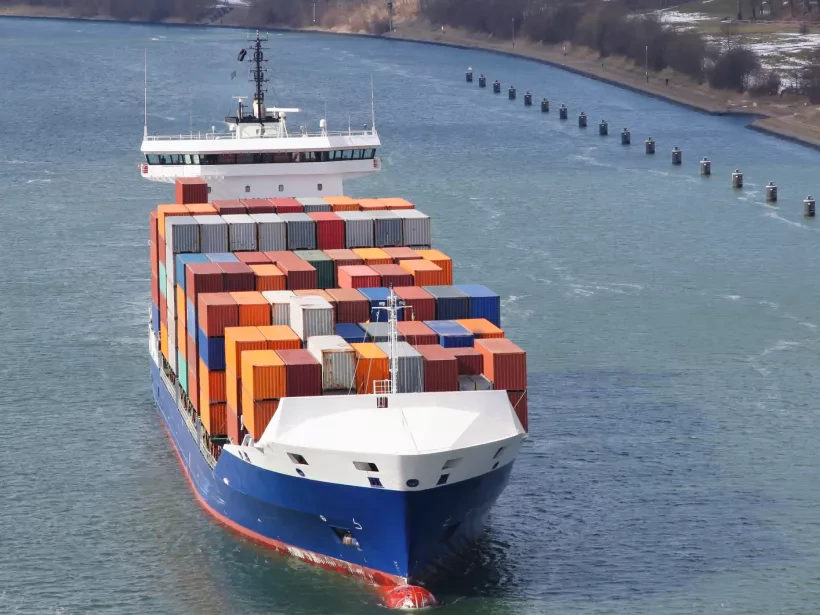
In 2026, the way you transport containerized freight matters more than ever. Rising fuel costs, stricter environmental regulations, complex customs procedures, and growing pressure to cut emissions are all reshaping how shippers move cargo across Europe, neighboring regions, and beyond.
Two options stand out for short distances and regional trade: short-sea shipping and road transport. Both are essential to modern logistics, but each offers different advantages depending on distance, volume, destination, and sustainability goals.
This article compares these two modes of transport to help shippers and logistics decision-makers determine the best solution for their final destination in 2026.
- The cheapest option isn’t always the smartest. Long-term efficiency can save more than lower freight rates.
- Short-sea shipping isn’t just slower sea travel. It can drastically cut costs, emissions, and congestion for regular cargo flows.
- Road transport still dominates last-mile delivery, but rising costs and emissions restrictions are reshaping its role.
- Supply chain disruptions expose hidden weaknesses: one mode may be flexible, the other more predictable.
- The real logistics advantage comes from combining sea and road strategically, not choosing one over the other.
How does short-sea shipping work?
Short sea shipping is a type of international maritime transport that moves cargo by sea between ports situated along coastlines, enclosed seas, and inland waterways, without crossing the open ocean.
It primarily operates across geographical Europe and EU member states. It also connects European Union countries and non-EU neighbors such as Norway and the UK, as well as non-European countries around the Black Sea, and other states. Short-sea shipping is also growing in North America.
A typical short sea network includes:
- Coastal routes and coasting trade
- Feeder services linking major ocean hubs to regional ports
- Transport via rivers, canals, and inland waterways
- Barge service on rivers and lakes
Key regions include the Baltic Sea, Mediterranean, Black Sea, and North American hubs such as the Great Lakes and the St. Lawrence Seaway connecting Canada and the US.
Short-sea shipping is commonly used for containers, bulk cargoes, and trailers using specialized vessels and regional fleets.
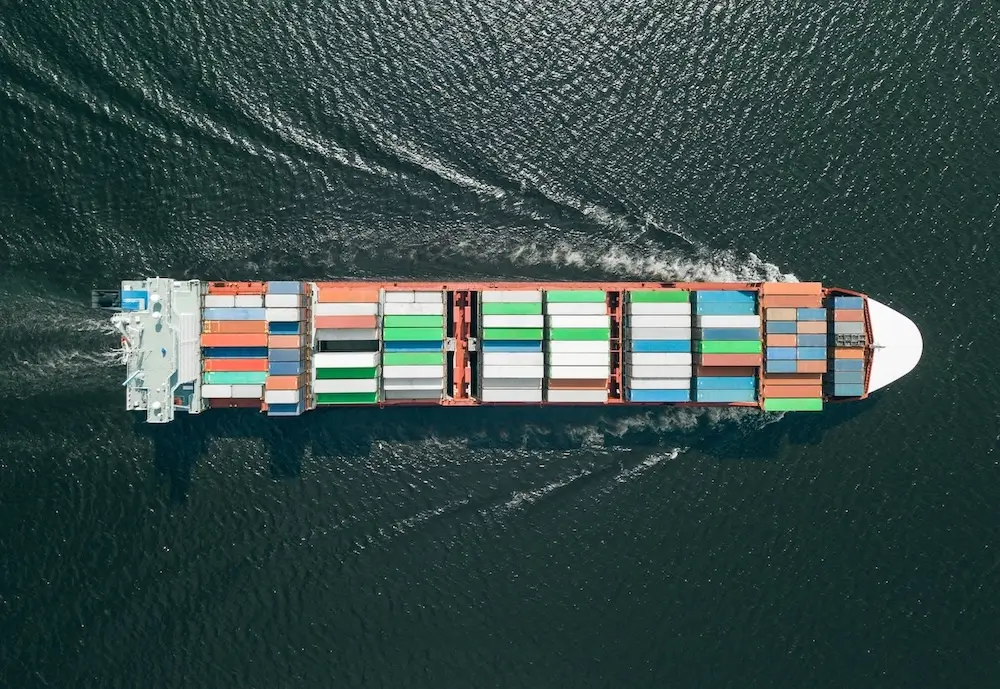
Road transport in 2026: Still essential, but under pressure
Road transport remains indispensable – especially for door-to-door delivery, inland destinations, and the last mile. Trucks offer unmatched flexibility, moving cargo directly from shipper to customer without transshipment.
But in 2026, road freight faces several growing challenges:
- Rising costs due to fuel, tolls, and driver shortages
- Emissions restrictions and low-emission zones (in many EU cities)
- Higher risk of congestion, delays, and theft
- Pressure from customers to reduce air pollution and environmental impact
Each truck can carry only a limited amount of freight, making road transport less efficient for large volumes over longer distances.
Given these challenges, how does road transport compare to short-sea shipping?
Short-sea shipping vs road transport
| Short-sea shipping | Road transport | |
| Speed | Slower than road, but predictable on scheduled services. | Faster for short distances or time-critical deliveries. |
| Cost | Lower cost per unit for large volumes. Strong cost savings. | Higher per-shipment cost. Cheaper only on short, domestic, or door-to-door routes. |
| Environmental impact | Lower emissions and carbon footprint. | Higher emissions and air pollution (particularly conventional diesel trucks). |
| Capacity | One ship can move hundreds of containers, allowing for more balanced logistics. | Limited to one container per truck. |
| Flexibility | Limited to ports and waterways. Requires truck or rail transport after unloading at the port. | High flexibility and direct access to inland destinations where ports aren't available. |
| Safety | Lower accident rates per tonne-kilometer and lower risk of cargo theft. | Higher accident exposure due to traffic, weather, and human error. Higher possibility of theft. |
| Scalability | Highly scalable. Well-suited for regular, high-volume flows and growing trade lanes. | Poor scalability to large volumes. Each additional load requires another vehicle, driver, and slot on congested roads. |
| Predictability | Scheduled services offer higher predictability, but delays can occur due to port congestion or weather. | Prone to delays from traffic, accidents, border crossings, and driver shortages. Transit times can vary significantly. |
| Regulatory burden | Maritime regulations apply. | Subject to tolls, emission zones, cabotage rules, driving bans, and frequent regulatory changes across countries. |
The limits of short-sea shipping
Despite its many advantages, short-sea shipping is not suitable for every transport task.
Key limitations include:
- Port dependency: Cargo must pass through ports, which adds more handling steps and requires efficient terminal operations.
- Fixed schedules: Services run on set timetables, offering less flexibility for last-minute or urgent shipments.
- Weather exposure: Sea conditions can cause delays, particularly in the winter months in northern regions.
- Inland connections required: Trucks or rail are almost always needed to reach the final destination.
These factors mean short-sea shipping works best for planned, volume-driven flows rather than ad-hoc or highly time-sensitive shipments.

Sustainability and environmental impact
From an environmental perspective, maritime transport has many advantages over road freight. Ships emit significantly less CO₂ per tonne-kilometer and contribute less to overall air pollution, especially when moving large volumes.
Short-sea shipping helps:
- Reduce congestion on roads
- Lower emissions per shipment
- Support climate and transport policy goals
On routes like the St. Lawrence – Great Lakes corridor, a ship can carry one tonne of cargo about 394 km on a liter of fuel, while a truck can only carry the same tonne around 49 km.
Typical ranges of CO₂ efficiencies of ships are between 0 and 60 grams per tonne-kilometre, while this range falls within 80–180 grams for road transport.
Performance during delays and disruptions
In practice, transport modes are often judged not by ideal conditions, but by how they perform when things go wrong.
Road transport under disruption
- Vulnerable to traffic congestion, accidents, and border delays
- Strongly affected by driver shortages and driving bans
- Higher exposure to cargo theft during stops and overnight parking
Short-sea shipping under disruption
- Less affected by road congestion and border closures
- More stable for large, scheduled cargo flows
- Port congestion or weather can impact multiple shipments at once
Short-sea shipping often offers better system-wide stability, while road transport remains more responsive for urgent exceptions.
The real cost of shipping: More than the freight rate
When comparing transport options, shippers need to look beyond the base rate. The real cost of moving containers comes from a combination of operational expenses, reliability, scalability, and risk – many of which only become visible over time.
Short-sea shipping costs
Short sea shipping benefits from economies of scale, allowing a single vessel to carry large volumes at a relatively low cost per unit. This makes it particularly attractive for regular, high-volume flows over short to medium distances.
Key cost characteristics include:
- Lower cost per container on fixed routes with high volumes
- Avoidance of road tolls, congestion charges, and driving bans that increasingly affect truck transport
- Greater cost predictability thanks to scheduled services and stable capacity
- Additional costs for port handling, terminal fees, and inland connections by rail or truck
While port operations add some complexity, these costs are often offset by savings achieved through scale, especially when cargo flows are consistent.
Road transport costs
Road transport offers simplicity and direct delivery, but its cost structure scales less efficiently.
Key cost drivers include:
- Fuel, tolls, labor, and regulatory compliance, all of which continue to rise
- Limited scalability – each extra container needs another truck, driver, and road slot
- Higher risk of delays, which can increase indirect costs such as inventory buffering and missed delivery windows
- Costs that rise sharply with distance, especially on international routes crossing multiple borders
While road freight may seem cost-effective for short or one-off shipments, costs grow quickly as volumes increase or routes lengthen.
Long-term cost efficiency
For long-term logistics planning, short-sea routes often deliver greater cost savings, even when transit times are longer. By spreading costs across large volumes and reducing dependence on congested road networks, short-sea shipping can lower total transport spend, improve budget predictability, and support more resilient supply chains.
External studies show that short‑sea maritime transport incurs significantly lower external costs per tonne‑km (around 0.7 €‑cent) compared with heavy trucks (about 3.4 €‑cent) when accounting for emissions, congestion, and infrastructure impact.
In 2026, the smartest cost decisions aren’t just about choosing the cheapest option per container – they’re about selecting the most stable and scalable solution for the entire transport network.

When short-sea shipping makes more sense
Short-sea shipping is the better choice when the focus is on scale, geography, and long-term efficiency rather than speed.
Coastal or island routes
Sea routes provide a direct alternative to long road detours, cutting border crossings, congestion, and driving restrictions.
High and regular volumes
Scheduled services handle large, repeat flows, letting shippers benefit from economies of scale and predictable capacity.
Sustainability goals
Shipping by sea lowers the carbon footprint per container compared with road transport.
Dense port networks
Enclosed or semi-enclosed seas like the Baltic, Mediterranean, and Black Sea support short sailing distances and efficient connections.
Feeder services
Feeder networks link main ports to smaller destinations, reducing reliance on long-haul trucking.
For example, containers shipped from Southern Europe to Scandinavia often move more efficiently by sea than by road. They avoid multiple border crossings, tolls, and driver constraints while improving cost and emissions performance.
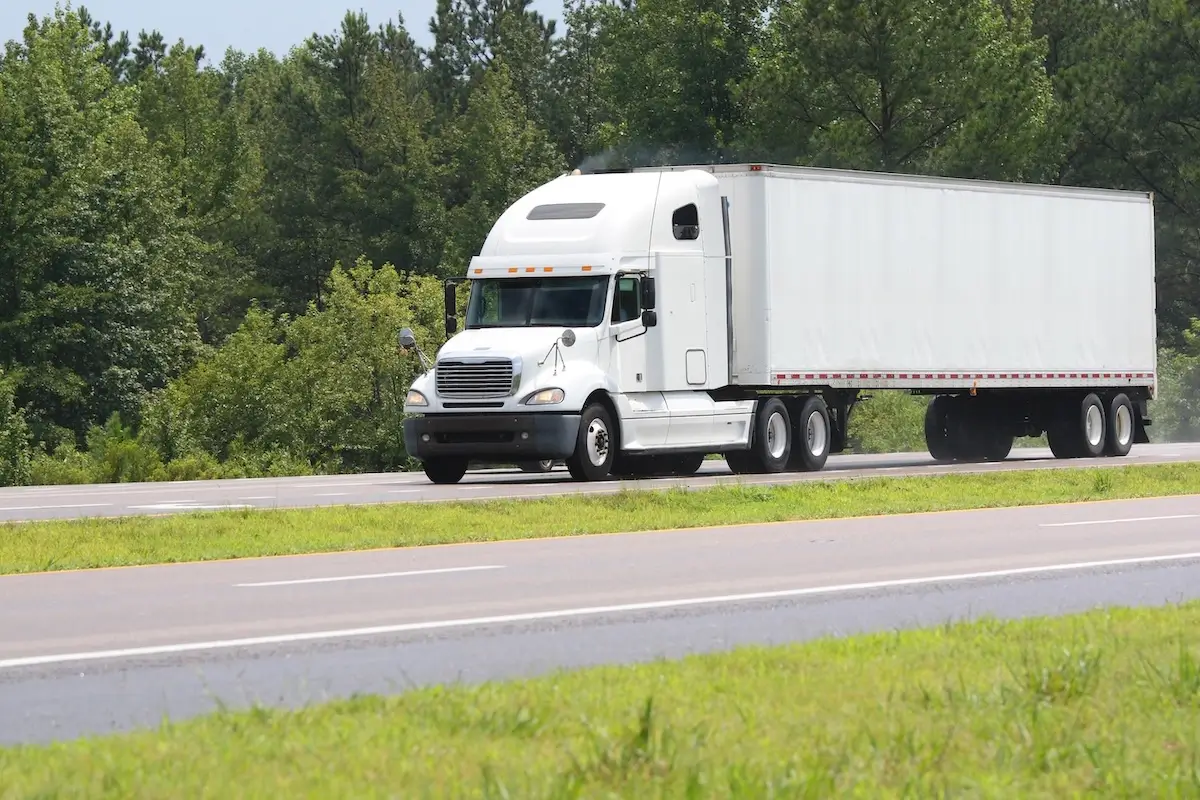
When road transport is still the better choice
Road transport is ideal when speed, direct access, and simplicity matter most.
Short, inland routes
For domestic or regional shipments without efficient port access, trucks provide the fastest, most straightforward solution.
Urgent deliveries
Trucks allow immediate dispatch and flexible routing, making them perfect for time-critical or just-in-time shipments.
High-value cargo
With fewer transshipment points, trucks reduce the risk of loss or damage – especially important for valuable goods.
Remote destinations
Trucks can reach almost any location with a road connection, making them essential for inland and hard-to-access deliveries.
For last-mile logistics, road transport remains irreplaceable, ensuring goods reach their final destination quickly and efficiently.
The smart middle ground: Multimodal transport
In 2026, the most resilient and efficient supply chains often combine sea and road transport to leverage the strengths of each mode.
- Ship containers by sea to a regional port. Short-sea shipping or feeder services handle the long haul, moving large volumes cost-effectively while reducing carbon footprint and air pollution compared to road transport.
- Transfer to rail or truck. Rail can efficiently cover inland distances, while trucks handle flexible first and last-mile delivery. This ensures containers reach destinations away from ports without adding delays or handling risk.
- Complete delivery to the final destination. Using road transport for the last leg provides the door-to-door service that short-sea alone cannot achieve, ensuring timely delivery and minimal handling risk.
This multimodal approach spreads operational risk, improves reliability across transport systems, and helps shippers balance speed and service quality.
- Use short-sea shipping for large, regular volumes along coastal or regional sea routes
- Use road transport for short distances, urgent deliveries, and inland destinations
- Use multimodal transport to balance cost, emissions, and flexibility
What shippers should consider before choosing
Before picking a transport mode, evaluate operational, strategic, and environmental factors to ensure it aligns with your logistics and business goals.
How much and how often you ship
High-volume, regular flows often favor short-sea shipping for economies of scale, while smaller, irregular shipments may be cheaper by truck.
Where your cargo is going
Check if the destination has port access or waterways. Remote or inland locations often rely more on road transport.
Crossing borders
International shipments can be complex. Short-sea shipping reduces border crossings, but customs still need careful handling.
Environmental impact
Companies aiming to cut emissions should consider that sea transport usually has lower CO₂ per tonne-kilometer than road.
Managing delays and risks
Assess the risk of traffic congestion, weather delays, theft, or schedule changes. Short-sea shipping is predictable for large volumes, while trucks offer flexibility for urgent deliveries.
Choosing the right transport mode is only part of the equation. Day-to-day execution matters just as much. Even the most cost-effective or sustainable transport option can lose its advantage if loading and unloading operations slow things down.
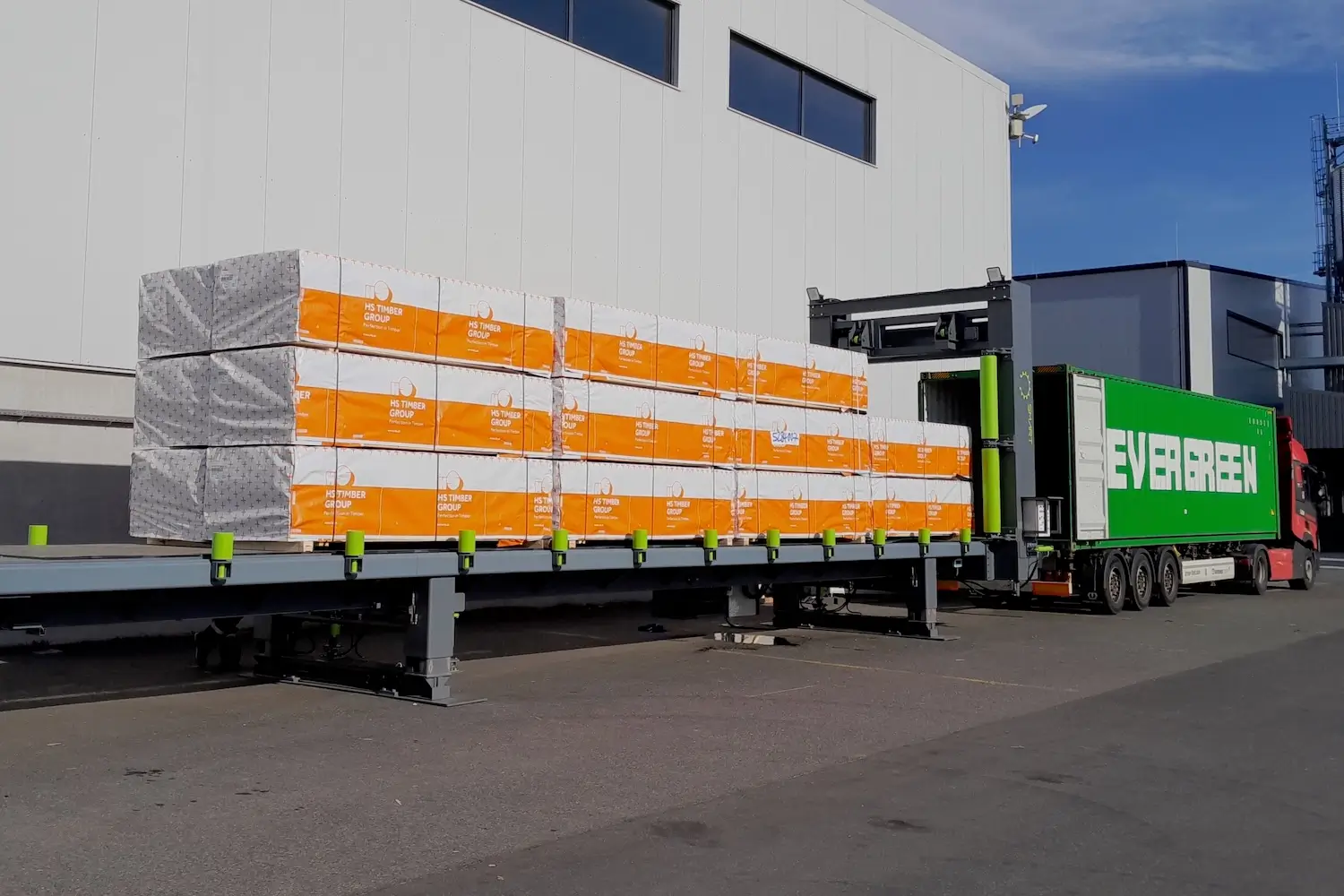
An often overlooked factor: Loading efficiency
No matter how containers move – by sea or by road – they still need to be loaded and unloaded. If cargo handling is slow, manual, or inefficient, overall logistics performance suffers.
Poor loading processes can:
- Increase port and terminal dwell time
- Create bottlenecks for trucks and vessels
- Raise the risk of damage and workplace accidents
Improving loading efficiency shortens turnaround times, increases safety, and helps both short-sea and road transport deliver their full cost and performance benefits.
Automated container loading plays a key role here, especially for shippers handling regular volumes or tight schedules.
Choosing the right mode of transport in 2026
Short-sea shipping and road transport each have clear strengths: sea routes are cost-effective and sustainable for large, regular volumes, while trucks offer speed, flexibility, and direct inland access.
The most efficient supply chains combine both, using short-sea shipping for long-haul flows and road transport for first and last-mile delivery. This multimodal approach balances cost, reliability, and environmental impact.
In 2026, the smartest logistics decisions focus on transport systems that combine the strengths of sea and road – making supply chains more efficient, reliable, and sustainable.