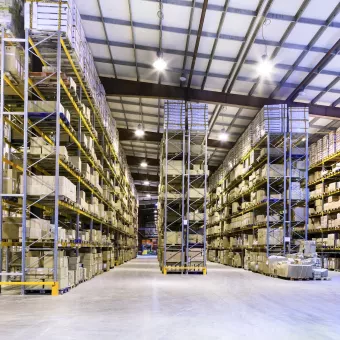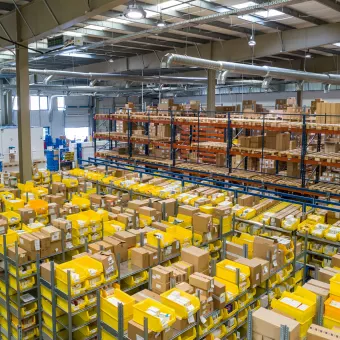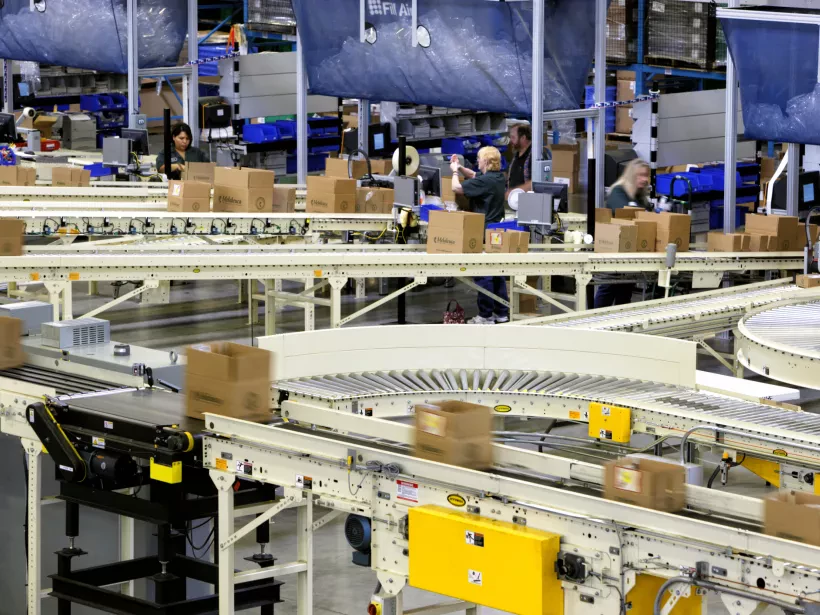
Warehouse operations are under more pressure than ever. Rising order volumes, labor shortages, and faster delivery expectations are forcing distribution centers to rethink supply chain operations. Warehouse automation has quickly become a key way to keep up. By 2028, 80% of warehouses and distribution centers are expected to deploy some form of automation equipment.
But automation isn’t just about adding technology. The real challenge is knowing what to automate, when to do it, and how to make it pay off.
Warehouse automation combines robotics, intelligent software, and automated material handling systems to improve storage, picking, sorting, and loading operations. Technologies such as automated storage and retrieval systems (AS/RS), autonomous mobile robots, and smart conveyor systems help warehouses move goods faster while reducing manual labor and operational errors.
In this guide, we’ll break down the key warehouse automation technologies, where they actually make sense, and how to approach automation in a way that delivers real operational impact.
What is warehouse automation, and how does it work?
Warehouse automation uses technology to handle day-to-day warehouse activities through automated processes, reducing reliance on manual effort. Instead of people managing every step, warehouse automation systems handle repetitive tasks like storing inventory, picking orders, packing products, and moving goods throughout the facility.
These technologies can support nearly every part of warehouse operations, from storage and internal movement to outbound logistics.
In practice, warehouse automation works through a combination of hardware and software. Physical automation includes conveyors, robotic picking systems, automated storage solutions, sensors, and scanners. The software layer – typically a warehouse management system (WMS) and related control systems – coordinates tasks and directs equipment in real time.
When an order comes in, the system identifies where items are stored and triggers the next steps. Robots retrieve products, conveyors move them to packing stations, and scanning systems verify accuracy along the way.
Because everything is connected, these systems also provide real-time visibility into inventory levels, order progress, and equipment performance. This makes it easier for warehouse operators and managers to track key metrics and continuously optimize warehouse operations.
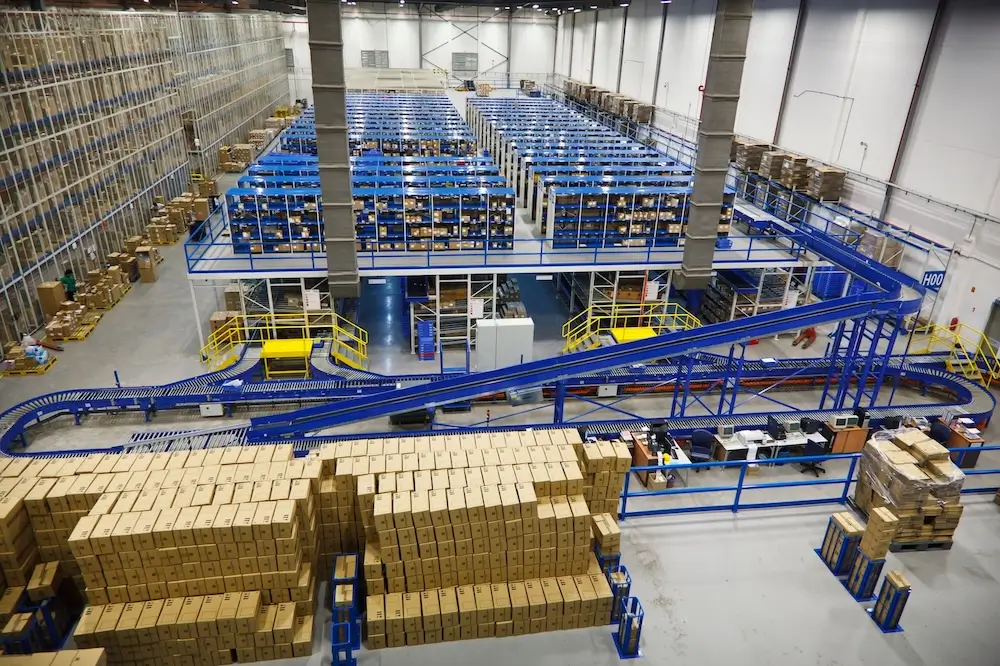
How to choose the right level of warehouse automation
There’s no one-size-fits-all level of warehouse automation. The best approach depends on order volume, warehouse size, and operational complexity.
Most facilities combine various automation technologies rather than relying on just one. In practice, many warehouses still operate at a basic or mechanized level. More advanced automation is gradually being adopted in higher-volume operations, with the share of facilities using it rising from around 5% to 10% over the past decade.
Basic warehouse automation
This includes simpler tools that reduce manual effort but still rely on people. For example, conveyor belts move goods between zones, while barcode scanners improve tracking and verification.
Best suited for: Smaller operations or warehouses with lower order volumes, where full automation isn’t necessary.
Warehouse system automation
Warehouse automation software connects inventory management systems, order processing, and equipment control, helping the whole operation run more smoothly.
Best suited for: Often the first step toward digital automation, especially for warehouses looking to improve visibility and coordination without major hardware investments.
Mechanized warehouse automation
Equipment like palletizers, sorting machines, and storage systems handle repetitive movement and positioning of goods, reducing manual handling.
Best suited for: Typically used in mid- to high-volume environments where consistent throughput is more important than flexibility.
Advanced robotics and AI
Autonomous mobile robots, robotic picking arms, and AI-driven tools optimize routing, inventory placement, and order fulfillment, enabling faster and more precise operations.
Best suited for: Most common in large-scale or high-growth operations where speed, scalability, and labor efficiency are critical.
Most warehouses start by automating one or two high-friction areas – often picking or internal transport – and expand from there once the impact is clear.
Key benefits of warehouse automation
Automated warehouse solutions remove bottlenecks that slow operations down. As order volumes grow and supply chains become more demanding, automation helps warehouses keep up without constantly adding more labor or floor space.
Higher operational efficiency
A major advantage of warehouse automation is how much faster goods can move through the operation. Automated warehouse systems can move, sort, and process items far more efficiently than manual workflows.
For example, conveyors can transport products continuously across the warehouse, keeping goods flowing between different work areas. Automated picking systems also reduce the time workers spend walking between storage locations. In many cases, they can improve order fulfillment speeds by up to 300% compared to manual processes.
As a result, warehouses can process more orders in less time, increase throughput, and generate meaningful cost savings.
Reduced labor costs and workforce shortages
Labor is one of the biggest challenges in modern warehouse operations. Many facilities struggle with staffing shortages, high turnover, and rising labor expenses.
Automation reduces reliance on manual work by handling repetitive tasks such as transporting goods, sorting items, or retrieving inventory. In high-volume warehouses, automation has been shown to reduce labor costs by around 30% per order.
Rather than replacing workers entirely, automation allows employees to focus on higher-value tasks that require problem-solving and oversight.
Improved order accuracy
Order accuracy is critical in warehouse operations, as even small picking errors can lead to returns, delays, and lower customer satisfaction.
Automated systems help eliminate many of these mistakes. Barcode scanning, robotic picking systems, and automated sorting equipment ensure that the correct items are selected and routed through the fulfillment process.
Industry comparisons show that manual picking accuracy typically ranges between 97–99%. However, best-in-class warehouse operations target accuracy rates of 99.5–99.9% – a level that’s much easier to achieve with automated picking, scanning, and verification systems.
Better space utilization
Warehouse space is expensive, and many facilities are running out of room as inventory levels continue to grow.
Automation helps optimize warehouse space. For example, automated storage and retrieval systems can store goods in high-density rack structures that make better use of vertical space, increasing storage capacity without expanding the physical footprint.
Safer working environments
Warehouse work often involves lifting heavy loads, operating forklifts, and moving products in busy environments. These tasks create real safety risks for warehouse workers. According to U.S. Bureau of Labor Statistics data, warehousing and transportation report about 4.8 injury cases per 100 workers, compared to 2.7 across all private industries.
Automation helps reduce these risks by handling physically demanding or repetitive work. Robots, conveyors, and automated handling systems can take over heavy lifting and transportation tasks, allowing workers to focus on monitoring operations and managing exceptions.
Where automation delivers the most value
Not every part of a warehouse benefits equally from automation. The biggest gains usually come from warehouse processes that are repetitive, time-consuming, or prone to errors.
In most warehouses, automation delivers the fastest ROI when applied to a few high-impact areas rather than across the entire operation.
For many warehouses, that includes:
- Order picking and internal transport
- Inventory storage and retrieval
- Sorting and order consolidation
- Loading and dispatch operations
Focusing on automated solutions in these areas delivers the fastest and most noticeable improvements in throughput, accuracy, and labor efficiency.
Core warehouse automation solutions
Warehouse automation is a combination of technologies that each solve a specific operational challenge. In practice, these systems fall into three main categories: software systems that coordinate operations, systems that move goods, and systems that store and retrieve inventory.
Warehouse management systems (WMS)
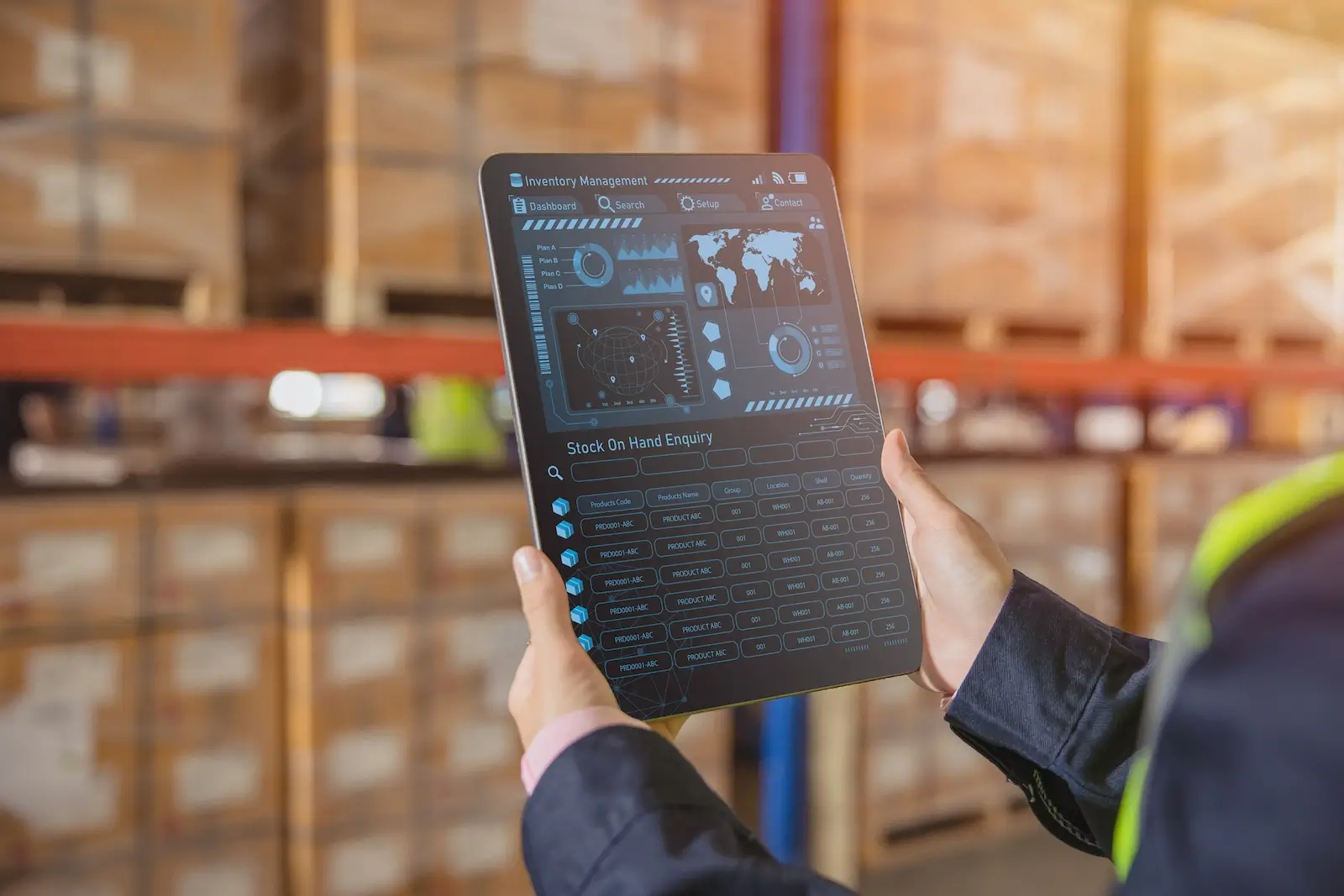
A warehouse management system (WMS) is the central platform for digital automation, coordinating most warehouse activities. It acts as the control center for operations, helping manage inventory, organize workflows, and guide workers or automated equipment through daily tasks.
One of the main roles of a WMS is inventory tracking. The system records where products are stored, monitors stock levels, and updates inventory in real time as goods move through the warehouse, helping streamline manual data entry.
A WMS also helps with order routing and task management. When an order comes in, the system determines where the items are located and assigns picking tasks to workers or automated systems. A WMS reduces unnecessary movement, speeds up order fulfillment, and can help increase order accuracy to above 99%.
Finally, modern WMS platforms provide analytics and operational insights. Warehouse managers can track metrics such as order volumes, picking performance, and inventory turnover, making it easier to identify bottlenecks and improve operations.
Automated storage and retrieval systems (AS/RS)
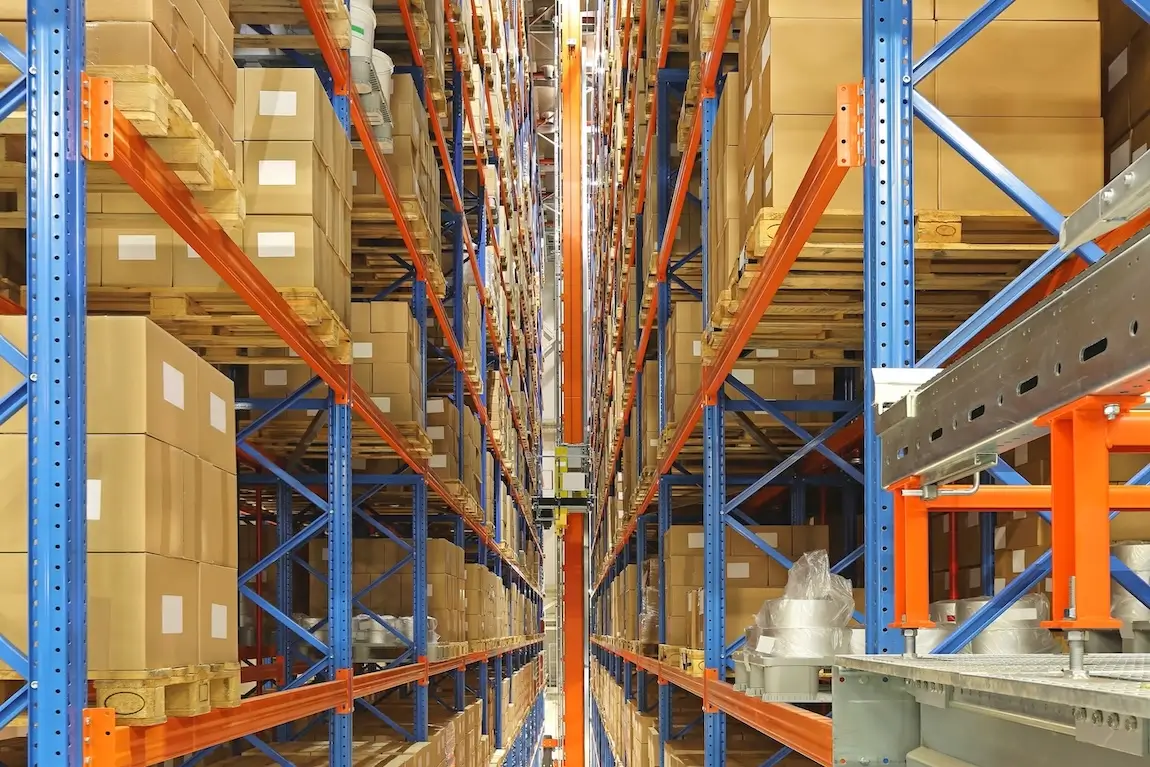
Automated storage and retrieval systems (AS/RS) are designed to automatically store and retrieve inventory inside high-density storage racks. These systems typically use cranes, shuttles, or robotic mechanisms to move goods between storage locations and picking stations.
Instead of workers manually placing items on shelves or retrieving them with forklifts, these systems handle the movement automatically. When an order comes in, the AS/RS retrieves the required items and delivers them to a workstation or conveyor.
One of the biggest advantages of AS/RS is improved storage density. In many cases, these systems can increase storage capacity by around 50% compared to manual methods, as they operate in narrow aisles and make better use of vertical space.
AS/RS can also improve picking accuracy and consistency. Since the system tracks where every item is stored and retrieves it automatically, the risk of human error is reduced, and inventory handling becomes more predictable.
Autonomous mobile robots (AMRs)
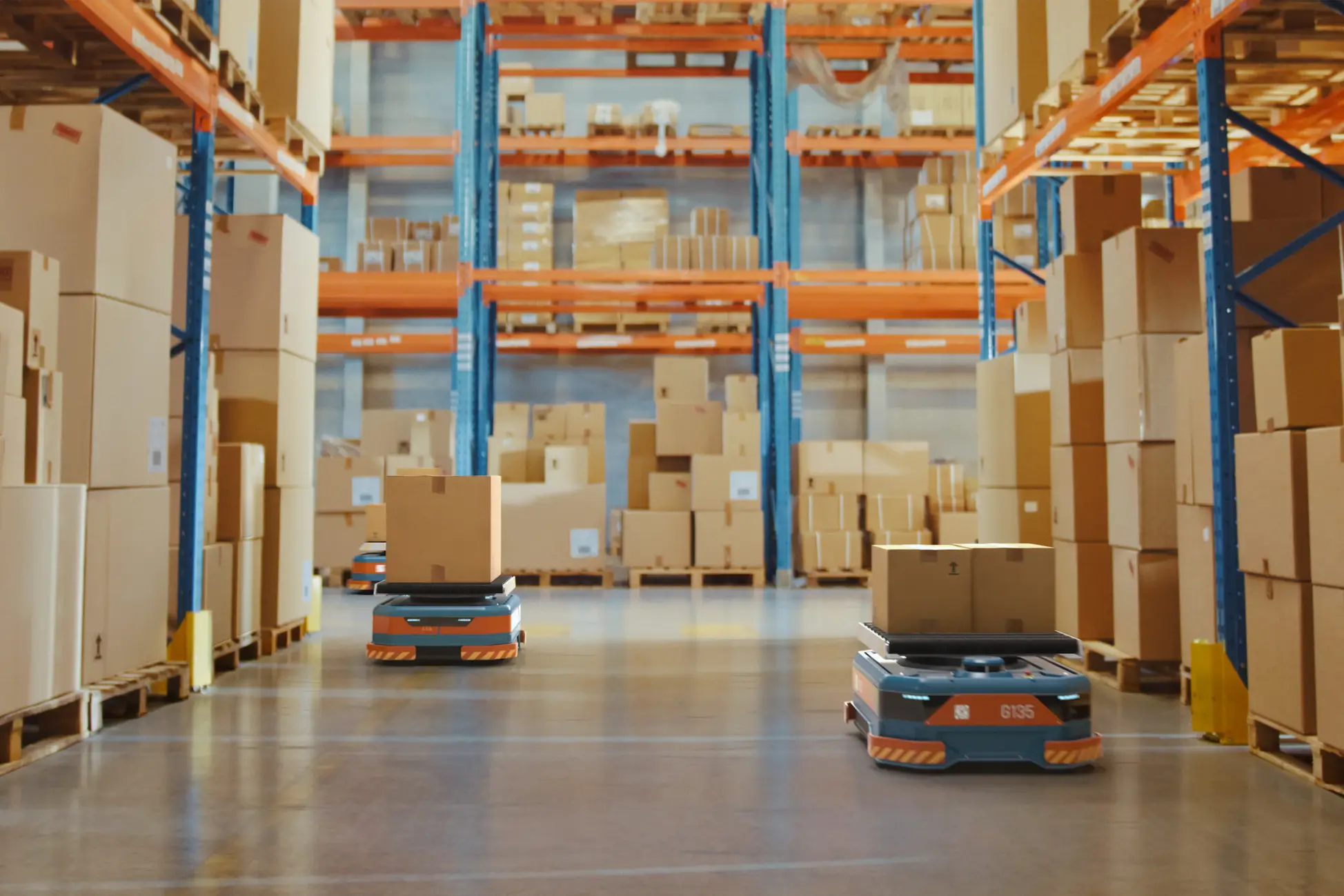
Autonomous mobile robots (AMRs) move independently across warehouse floors to transport goods between different workstations. They use sensors, cameras, and onboard software to understand their surroundings, allowing them to detect obstacles and adjust their routes in real time.
AMRs are commonly used to move inventory from storage areas to picking stations, packing zones, or shipping docks. Instead of workers walking long distances to collect items, the robots bring the products directly to them.
This approach helps reduce travel time inside the warehouse and allows employees to focus on picking, packing, and quality checks. In some operations, daily walking distances have been reduced from around 12 miles to less than 5 per shift. At the same time, AMRs help maintain a steady flow of goods between different parts of the operation, improving overall workflow.
Automated guided vehicles (AGVs)
AGVs are mobile robots that move goods around the warehouse along predefined routes. Unlike autonomous mobile robots, which navigate freely, AGVs usually follow fixed paths marked by magnetic tape, sensors, or floor markers.
They are often used to transport pallets, containers, or heavy loads between storage areas, production lines, and shipping zones. By automating these repetitive transport tasks, warehouses can reduce forklift traffic, improve safety, and keep goods moving more consistently through the facility.
Collaborative robots (Cobots)
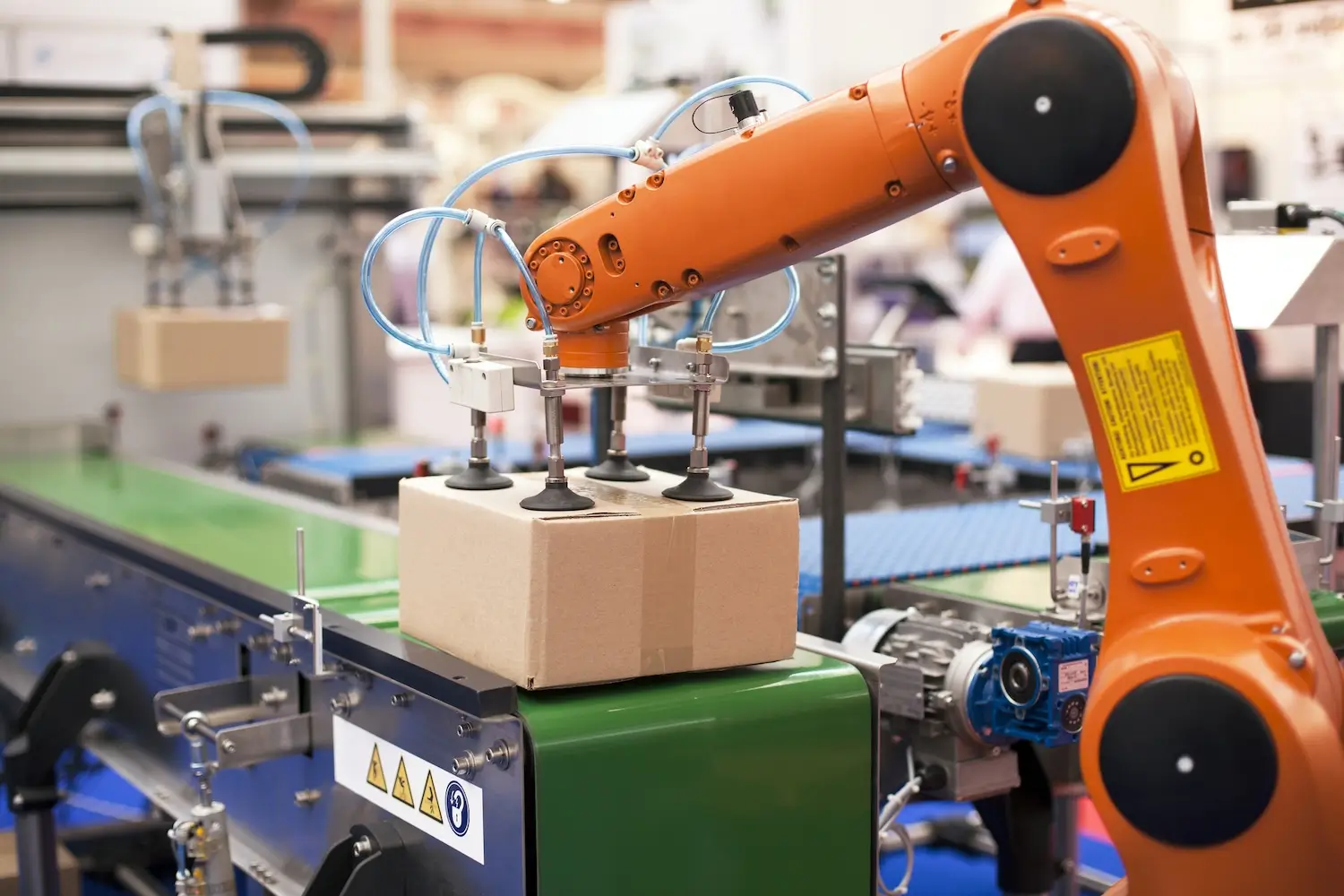
Collaborative robots, often called cobots, are designed to work alongside human workers in warehouse environments. They’re built to safely operate in the same space as people, rather than being separated into restricted areas.
In warehouses, cobots often assist with tasks such as picking, packing, sorting, or palletizing. They can help lift items, position products, or handle repetitive movements while workers focus on tasks that require judgment or quality control.
Cobots help increase productivity and reduce physical strain, making them especially useful for repetitive or physically demanding tasks.
Conveyors and automated sortation systems
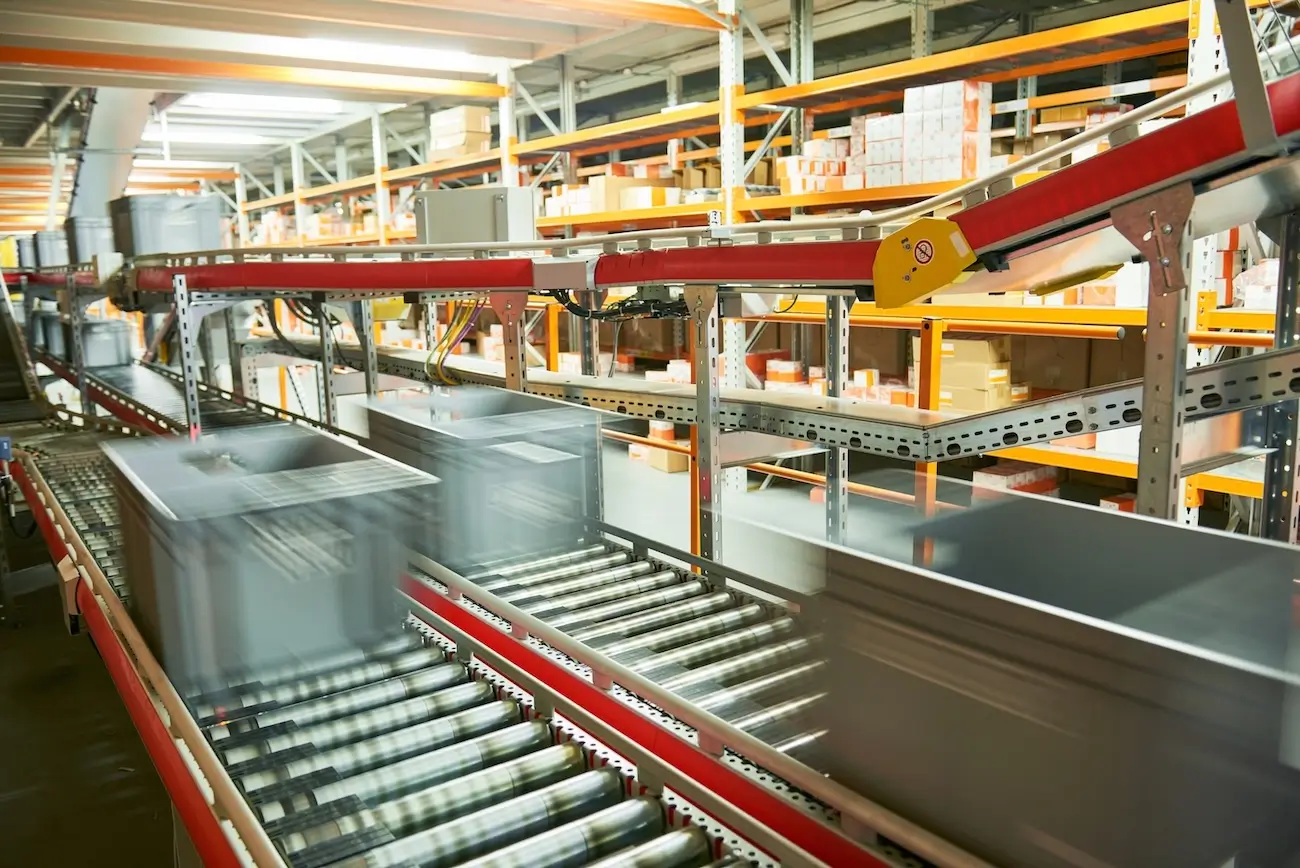
Conveyors and sortation systems automate the movement of goods across different areas of the warehouse. Instead of workers or forklifts transporting products manually, conveyors move items continuously between storage, picking, packing, and shipping zones.
Sortation systems add another layer of automation by directing products to the correct destination. Using sensors, scanners, or barcode readers, the system identifies each item and automatically routes it to the right packing station, shipping lane, or storage area.
These systems reduce manual handling, speed up order processing, and improve overall operational efficiency.
Goods-to-person systems
Goods-to-person systems change the traditional way orders are picked in a warehouse. Instead of workers walking through long aisles to find products, automated systems bring the items directly to them.
These systems typically use robots, shuttles, or automated storage equipment to retrieve inventory from storage locations and deliver it to a picking station. Workers then select the required items and place them into orders while the system handles the transport.
By reducing walking time, goods-to-person systems can significantly improve picking speed and efficiency. They also make order picking more consistent, since products are delivered in a controlled, organized way.
Automated loading systems
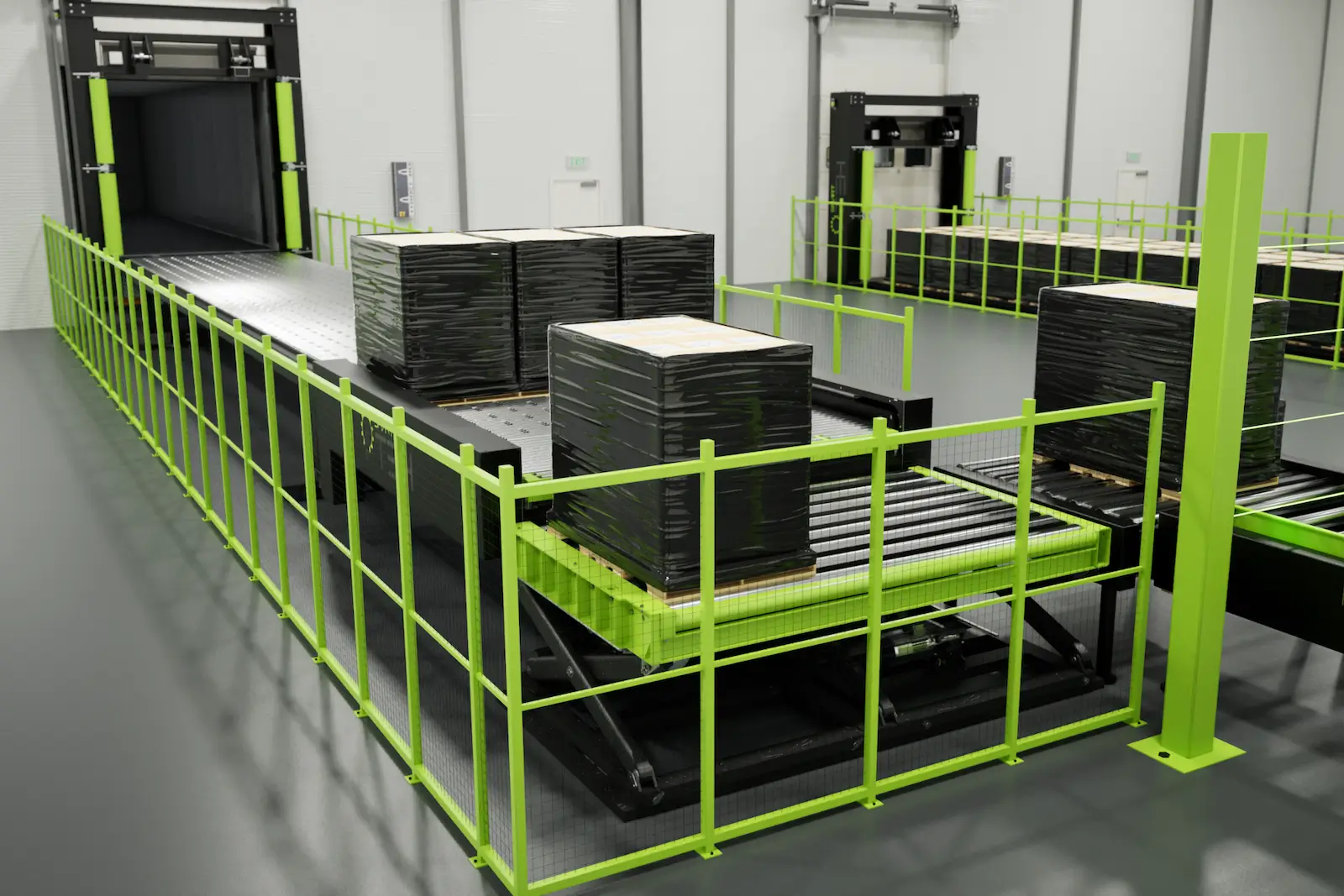
Most warehouse automation efforts focus on storage and picking. But in many operations, the loading stage is where delays, manual work, and inefficiencies still build up. In many warehouses, loading trucks or containers is still done manually, which often becomes a bottleneck and requires significant manual effort.
Loading automation systems help move goods from conveyors or staging areas directly into trucks or shipping containers. Instead of relying on forklifts and manual handling, automated equipment loads pallets, cartons, or bulk cargo in a consistent and controlled way.
Technologies such as automated truck loading systems and container loading systems can help distribution centers load vehicles up to 70% faster. They also reduce manual handling and improve product and staff safety during one of the most physically demanding parts of warehouse operations.

AI, computer vision, and IoT
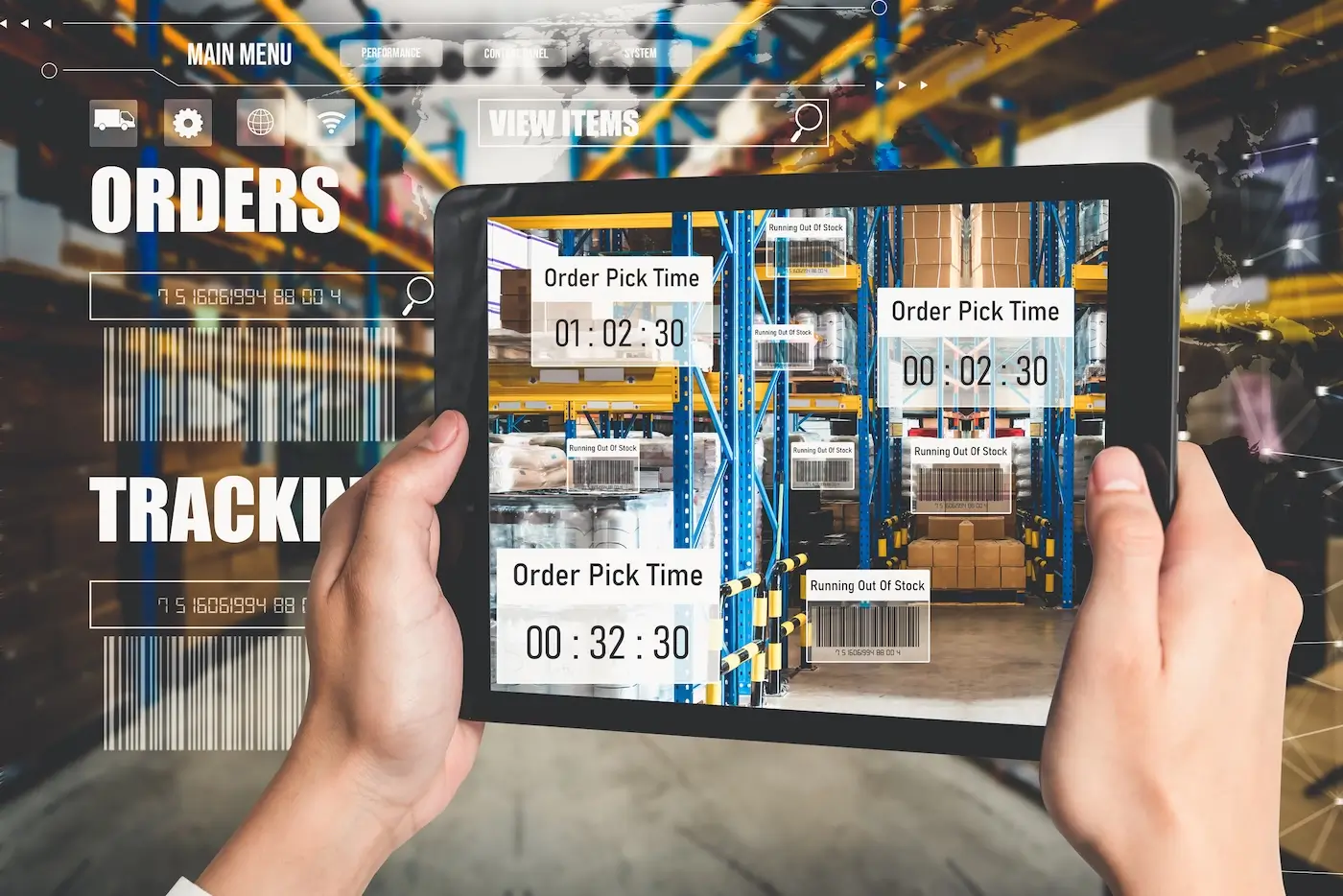
Artificial intelligence (AI), machine learning, computer vision, and the Internet of Things (IoT) add a layer of decision-making and real-time visibility to warehouse operations. Instead of relying only on predefined rules, these advanced warehouse automation technologies respond dynamically to what’s actually happening on the warehouse floor.
One practical application is smart inventory tracking. Sensors, cameras, and connected devices can automatically monitor inventory levels and track the movement of goods without manual scans or checks. This improves inventory visibility and supports more accurate inventory control.
AI is also used to optimize day-to-day operations. For example, systems can adjust picking routes based on current workloads, recommend better inventory placement, or flag potential bottlenecks before they impact throughput.
At the same time, IoT devices enable continuous monitoring of equipment and workflows. Managers can track equipment performance, detect anomalies, and respond to issues early – helping reduce downtime and keep operations running consistently.
Best practices for implementing warehouse automation
New technology can bring major improvements to warehouse operations, but successful warehouse automation depends on how well it's implemented. The most effective automation projects start with clear processes, the right systems, and a well-prepared team.
Start by optimizing your existing processes
Before adding automation, it’s important to understand how your current warehouse processes operate. If a workflow is inefficient, automation will only make those inefficiencies happen faster.
Start by reviewing how goods move through the warehouse – from receiving and storage to picking, packing, and shipping. Identifying bottlenecks or unnecessary steps early helps ensure that automation improves operations rather than adding complexity.
Choose technologies that can scale with you
Warehouse needs change over time, so automation systems should be able to grow with the operation. Choosing scalable technologies makes it easier to expand automation without redesigning the entire facility.
Modular systems and flexible robotics are especially useful. They allow warehouses to add new equipment, increase capacity, or adjust workflows as order volumes and product ranges evolve.
Ensure systems are properly integrated
Automation delivers the most value when systems can communicate seamlessly. A well-integrated warehouse typically connects its warehouse management system (WMS) with other systems such as resource planning platforms, robotics, and material handling equipment.
This allows data to flow between systems in real time, improving visibility into inventory levels, order status, and overall performance.
In practice, integration is where many automation projects struggle. Data inconsistencies, mismatched systems, or poor visibility between platforms can quickly reduce the expected benefits. Making sure your systems communicate reliably – and that the underlying data is accurate – is just as important as the automation itself.
Prepare and train your workforce
Automation changes how people work inside the warehouse. Employees may need to interact with robots, manage automated equipment, or monitor digital systems.
Providing proper training helps workers understand how the technology supports their tasks. Strong training programs and clear communication also help reduce resistance to change and ensure that new systems are used effectively.
Roll out automation in phases
Implementing automation all at once can be risky and difficult to manage. A phased approach is usually more effective.
Many warehouses start with pilot projects in a specific area of the facility. This allows teams to test the technology, evaluate performance, and make adjustments before expanding automation to other parts of the operation.
Track performance and measure ROI
To understand the impact of automation, warehouses need to track the right performance metrics. Monitoring key indicators shows whether automation is actually delivering results.
Common metrics include order fulfillment time, picking accuracy, labor productivity, and storage density. Tracking these KPIs over time allows warehouse managers to refine processes and continuously improve performance.
Be selective about what you automate
One of the most common mistakes is trying to automate everything at once. Not every process needs automation – and in some cases, manual workflows are still the more practical option.
Processes that change frequently, involve complex decision-making, or have low volume may not benefit much from automation. In these cases, adding technology can increase complexity without delivering real value.
The most successful automation strategies focus on stable, repeatable processes first – and expand from there.
Challenges of warehouse automation
Warehouse automation brings clear benefits, but it’s not without challenges. Understanding these early on helps avoid costly mistakes and reduces risk during implementation.
Initial investment considerations
Automation systems can require a significant upfront investment. Equipment like AS/RS, robotics, and conveyor systems, along with software and integration costs, can add up quickly.
The key is to look beyond the initial cost. Automation pays off over time through higher productivity, lower labor costs, and improved accuracy. Still, it’s important to plan budgets carefully and focus on solutions that deliver clear ROI.
Integration and system compatibility
Automation doesn’t work in isolation. It needs to connect with existing systems and software platforms.
Getting these systems to work together can be complex, especially in warehouses with legacy infrastructure. Poor integration can lead to data gaps, delays, or inefficient workflows, so it’s critical to plan integrations properly and involve experienced partners when needed.
Workforce adaptation
Automation changes how people work. Employees may need to learn new systems, manage automated equipment, or shift into different roles.
Without proper training and communication, this can lead to resistance or confusion. Making sure teams understand the changes – and how to work with new systems – is essential for a smooth transition.
Maintenance and system downtime
Automated systems require regular maintenance to remain reliable. When something goes wrong, the impact can be immediate and affect multiple parts of the operation.
That’s why it’s important to have maintenance plans in place, along with technical support and backup processes. Preventive and predictive maintenance, along with monitoring, can help reduce downtime and keep operations running smoothly.
Choosing the wrong processes to automate
When automation doesn’t deliver, it’s usually not the tech but the planning behind it. Automating inefficient workflows, unstable processes, or low-impact areas can lead to disappointing results.
Without a clear understanding of where automation brings the most value, companies risk adding complexity without improving performance.
Is warehouse automation right for your business?
Not every warehouse needs full automation right away. But if you’re starting to feel pressure in your operations, it may be time to take a closer look at where automation could help.
A simple way to evaluate this is to ask yourself a few key questions:
Are your order volumes increasing?
If you’re struggling to keep up with demand, automation can help you scale without constantly adding more staff.
Is your inventory becoming difficult to manage?
Managing a large number of SKUs or frequent order changes can quickly become inefficient without the right systems.
Is your warehouse space being used inefficiently?
If you’re running out of room, automation can help you make better use of your existing space.
Are labor costs rising, or is staffing becoming a challenge?
Automation can reduce reliance on manual work and make operations more stable.
Are you planning for growth?
If your business is expanding, investing in automation early can help you avoid bottlenecks later.
If you answered “yes” to more than one of these, it’s a strong signal that automation could deliver real value. The goal isn’t to build a fully automated warehouse overnight. It’s to identify where automation will remove the most friction in your current operation – and start there.
A practical way to think about warehouse automation
Warehouse automation is becoming a practical necessity for many operations – but that doesn’t mean every warehouse needs the same approach. For many companies, it’s becoming a practical way to keep things running smoothly as volumes grow and operations get more complex.
At the same time, it’s not about throwing robots at every problem. The real value comes from understanding your workflows, fixing what’s not working, and then using the right mix of technology to improve it. That might mean automating picking, improving storage, or speeding up how goods are loaded and shipped out.
The good news is you don’t have to do everything at once. Most warehouses start small, test what works, and build from there. In the end, warehouse automation is just a tool. When it’s used the right way, it helps you move faster, reduce errors, and make day-to-day logistics operations a lot easier to manage.
The warehouses that see the best results aren’t the ones with the most automation – they’re the ones that apply it in the right places.