Are you loading trucks manually? Most businesses start that way – you have a team, maybe some forklifts, and a process that gets the job done. It doesn't cost much to set up, and it works.
But over time, small problems start adding up. Higher operating costs, slower loading and unloading days, and the occasional damaged pallet. Nothing catastrophic, but enough to make you wonder if there's a better way.
That's why a lot of companies are taking a closer look at automated truck loading and warehouse automation. It's faster and more consistent, but it costs more to get started. So the question isn't really “which one is cheaper?” – it's “which one actually makes more sense for my business over the long run?”
That's what we'll help you figure out in this article.
- The upfront cost of automation is real, but so is the long-term cost of manual labor, turnover, and inefficiency.
- Labor is usually the biggest variable. The harder and more expensive it is to staff your dock, the faster automation pays off.
- Low volume, variable shipments, tight budget – manual is likely the right call for now.
- High volume, staffing pressure, growth plans – automation starts making a lot of financial sense.
What is manual truck loading?
Manual truck loading is exactly what it sounds like – workers loading goods into trucks using forklifts, pallet jacks, or by hand.
In a typical distribution facility, that means a team on the loading dock, moving pallets and organizing cargo inside trailers or containers. The exact process depends on what you're shipping, but it's usually a mix of forklift work and manual handling.
It's the most common setup for smaller operations or businesses that don't move a huge volume of shipments, where flexibility matters more than raw speed.
What is automated truck loading?
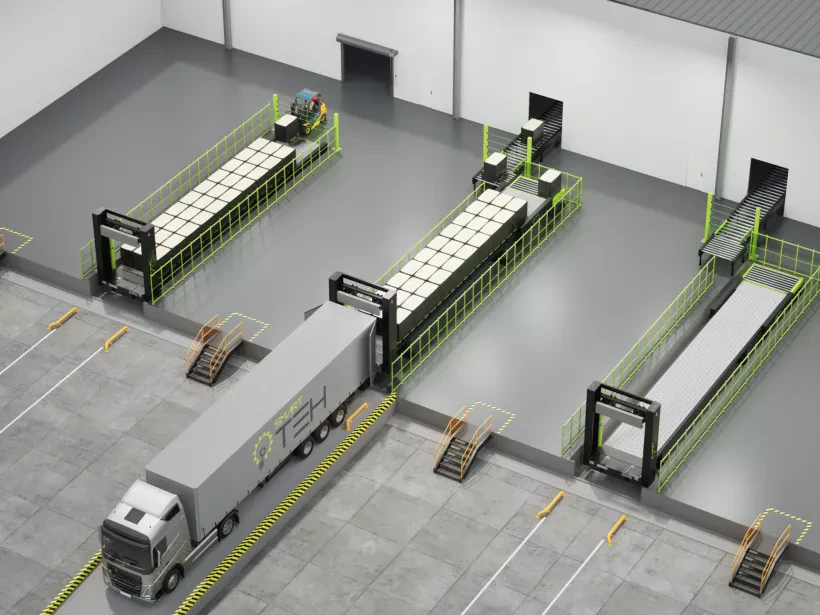
Automated truck loading uses equipment – conveyors, loading platforms, robotic systems, etc. – to move goods into trucks with little or no manual work.
These ATLS systems range quite a bit in complexity. On the simpler end, you have things like telescopic conveyors that help workers load faster. On the other end, you have fully automated solutions capable of handling the entire truck loading and unloading process on their own.
Generally, these setups make the most sense for distribution centers with high volumes and predictable, repetitive workflows, where speed and consistency are the priority.
Cost breakdown: Manual vs automated truck loading
The upfront price is just one part of the equation. To really compare the two, you need to look at what each option costs you month after month – labor, efficiency, maintenance, damage. It all adds up.
Labor costs
Manual loading is labor-intensive by nature. You're paying wages, covering overtime when things get busy, spending time and money on training, and dealing with turnover regularly. If you're in an industry where warehouse workers are hard to find, that pressure gets even worse.
With warehouse automation, you need fewer people in the docking area, but the people you do need are more technical – operators, maintenance staff. The team is smaller, and over time, the labor bill is lower.
| Workforce area | Manual loading | Automated loading |
| Workforce size | Larger loading teams | Smaller teams |
| Labor costs | Higher ongoing costs | Lower long-term costs |
| Overtime dependency | Common during peak periods | Reduced |
| Training needs | Basic operational training | Technical/system training |
| Employee turnover impact | High | Lower |
Equipment and setup costs
This is where manual loading has a clear edge: it's cheaper to get started. Forklifts, pallet jacks, standard dock equipment – most operations already have what they need.
Automated systems are a different story. Depending on what you're installing, you could be looking at conveyors, loading platforms, sensors, software, installation, and changes to your facility layout. The upfront cost is significant, and for many businesses, that's the main thing that gives them pause.
| Cost area | Manual loading | Automated loading |
| Initial investment | Lower | Higher |
| Equipment needed | Forklifts, pallet jacks | Coneyors, automated systems |
| Installation costs | Minimal | Can be significant |
| Warehouse modifications | Usually not required | Often required |
| Scalability | Limited | Easier to scale |
Operational efficiency
For smaller or more variable operations, manual loading is perfectly fine. But it's slower, and the speed varies – a lot depends on who's working that day, how experienced they are, and how busy things are.
Automated loaders handle cargo faster and more consistently. You know what you're getting, shift after shift. In a high-volume environment, that predictability is worth a lot and helps increase productivity.
| Performance metric | Manual loading | Automated loading |
| Loading speed | Slower | Faster |
| Process consistency | Variable | Predictable |
| Throughput capacity | Lower | Higher |
| Performance during peak periods | Can slow down | More stable |
| Dependence on workforce availability | High | Lower |
Maintenance and downtime
With manual loading, the equipment side is fairly straightforward – forklifts break down, dock equipment needs servicing, but nothing too complex. The bigger issue is usually people: someone calls in sick, someone gets hurt, someone makes a mistake under pressure. That's where delays happen.
Automated systems need more specialized maintenance, and when something breaks, it can be harder to fix quickly. But when they're running well, they're very efficient – fewer human errors, fewer surprise slowdowns, and better operational safety.
| Risk area | Manual loading | Automated loading |
| Technical maintenance | Moderate | More specialized |
| Risk of equipment failure | Moderate | Moderate |
| Human-related disruptions | Higher | Lower |
| Operational stability | Less consistent | More consistent |
| Downtime risk | Staffing and manual errors | Technical issues |
Error and damage costs
The faster you're working manually, the more mistakes happen. Damaged goods, uneven loads, things dropped or misplaced – it's hard to avoid entirely, especially when the dock is busy or short-staffed. Over time, those small losses add up.
Automated systems are more precise. Loads go in the same way every time, which means safely handled cargo, better quality control, and fewer shipping errors. That consistency helps increase safety and reduce workplace accidents.
| Quality metric | Manual loading | Automated loading |
| Risk of product damage | Higher | Lower |
| Loading accuracy | Variable | More precise |
| Human error risk | Higher | Reduced |
| Shipment consistency | Less reliable | More reliable |
| Potential loss-related costs | Higher over time | Lower over time |

Hidden costs most companies ignore
When people compare manual and automatic loading, they usually focus on the obvious numbers – labor, equipment, and installation. But some of the highest costs are the ones that don't show up clearly on a spreadsheet.
Employee turnover and training
Manual loading is hard, repetitive work. People leave. And every time someone leaves, you're paying to recruit, hire, and train someone new, while the rest of the team picks up the slack. During a busy period, putting a new, inexperienced worker on the dock means slower loading and more mistakes, right when you can least afford it.
| Cost driver | Impact on operations |
| Frequent hiring | Increased recruitment costs |
| New employee training | Lost productivity during onboarding |
| High turnover | Inconsistent workflow and performance |
| Shortage of skilled workers | Delays and staffing pressure |
Workplace injuries and insurance
Loading dock work involves a lot of heavy lifting, repetitive motion, and moving equipment – injuries happen. And when they do, you're looking at medical costs, workers' compensation claims, days of lost capacity, and potentially higher insurance premiums long after the incident. Even a relatively minor injury can throw a whole shift into chaos.
| Cost driver | Potential impact |
| Workplace injuries | Compensation and medical costs |
| Lost workdays | Reduced operational capacity |
| Insurance claims | Higher long-term insurance expenses |
| Safety incidents | Delays and workflow interruptions |
Delayed shipments and missed SLAs
A slow loading dock doesn't just cause problems in the warehouse – it follows the truck out the door. If a truck leaves late, deliveries are late, customers notice, and if you're under a service level agreement, you might be paying penalties. These costs rarely get traced back to loading efficiency, but they should be.
| Cost driver | Business impact |
| Slow loading times | Delayed departures |
| Missed delivery windows | Customer dissatisfaction |
| SLA penalties | Financial losses |
| Operational bottlenecks | Reduced overall efficiency |
Inefficient space utilization
Manual loading takes up space with staging areas, room for forklifts to maneuver, and space to organize goods before they go on the truck. Over time, that footprint limits how much you can move through the warehouse and makes it harder to grow.
| Cost driver | Operational impact |
| Larger staging areas | Reduced warehouse efficiency |
| Forklift traffic | Congestion and slower movement |
| Poor space utilization | Lower throughput capacity |
| Limited scalability | More difficult expansion |
Seasonal labor challenges
Peak season puts pressure on everything, and manual loading feels it most. You need more people fast, temporary workers take time to train, overtime costs climb, and the whole team is under more pressure, which means more mistakes and a higher chance of injuries. All at the moment when things need to run smoothly.
| Cost driver | Staff impact |
| Seasonal hiring needs | Increased labor costs |
| Overtime during peak periods | Higher operating expenses |
| Labor shortages | Delays and reduced productivity |
| Increased workload pressure | Higher risk of mistakes and injuries |
ROI: When does automation pay off?
The key question is simple: at what point do the savings from automation outweigh the cost of buying and installing it?
Manual loading is cheaper to start, but the ongoing costs – labor, overtime, turnover, damage – keep adding up year after year. Automation costs more upfront, but it chips away at those recurring expenses. At some point, the lines cross.
How quickly that happens depends on your situation:
| ROI driver | Impact on ROI |
| Shipment volume | Higher daily volumes shorten the payback period |
| Labor costs | Higher wages accelerate ROI |
| Operating hours | Multi-shift or 24/7 operations benefit more |
| Loading speed | Faster turnaround increases automation value |
| Seasonal demand | Automation reduces dependence on temporary labor |
| Product type and handling complexity | Repetitive processes are easier to automate efficiently |
Example ROI scenario
Say you're running a warehouse that loads 25–30 trucks a day across two shifts. In a manual setup, that typically means 4–6 loading employees per shift, plus forklift operators and supervisors.
U.S. warehouse loaders earn around $19–$21 per hour on average. But once you factor in benefits, insurance, payroll taxes, overtime, and overhead, the real cost per employee is closer to $26–$30 an hour.
| Cost category | Estimated monthly cost |
| 8–12 loading employees | $75,000–$110,000 |
| Overtime costs | $6,000–$15,000 |
| Training and turnover | $2,000–$5,000 |
| Product damage and loading errors | $2,000–$6,000 |
| Forklift maintenance and downtime | $2,000–$4,000 |
| Total estimated monthly costs | $87,000–$140,000 |
Now say you invest in an automated truck loading system or truck unloading solutions – somewhere in the range of $200,000–$300,000, depending on the setup.
After installation, you'd typically expect to:
- Reduce loading labor needs by 30–50%
- Shorten loading times by 20–40%
- Reduce overtime during peak periods
- Improve consistency and throughput
- See fewer loading-related damage claims
| Potential savings | Estimated monthly reduction |
| Reduced labor costs | $20,000–$40,000 |
| Lower overtime expenses | $4,000–$10,000 |
| Reduced product damage | $1,000–$3,000 |
| Fewer operational delays | $2,000–$5,000 |
| Total estimated monthly savings | $27,000–$58,000 |
At that rate, you're looking at a payback period of roughly:
- 6–12 months for high-volume operations with high labor costs
- 12–18 months for mid-volume warehouses
- Longer for smaller operations with fewer daily trucks or shorter shifts
The higher your volume and the more shifts you run, the faster the math works in automation's favor.
Which option is right for you?
Most operations fall clearly into one camp or the other once you look honestly at your volume, your labor situation, and your budget.
When manual truck loading makes more sense
- You're loading a relatively small number of trucks per day, and the efficiency gains don't justify the investment
- Cash is tight, and your current team and equipment are handling the workload
- Your shipment volumes and loading needs change frequently, making a simpler setup easier to manage
When automated truck loading is the best option
- You're loading a high volume of trucks every day, and the dock is becoming a bottleneck
- Good workers are hard to find or expensive to keep, and it's affecting how reliably you operate
- You're planning to grow and need a setup that can scale without just throwing more people at the problem
Decision checklist
A few questions worth thinking through before you decide:
- Volume: How many trucks or pallets are you loading each day?
- Budget: What upfront investment can you absorb, and how long are you willing to wait for ROI?
- Growth plans: Is your volume likely to increase in the next year or two?
- Labor availability: Is hiring and keeping dock workers getting harder or more expensive?
Thinking of switching to automation?
The right automated loading solution can help your business load and unload trucks faster, reduce manual handling, and improve overall efficiency.
Automated Truck Loading System |
RollerPlate
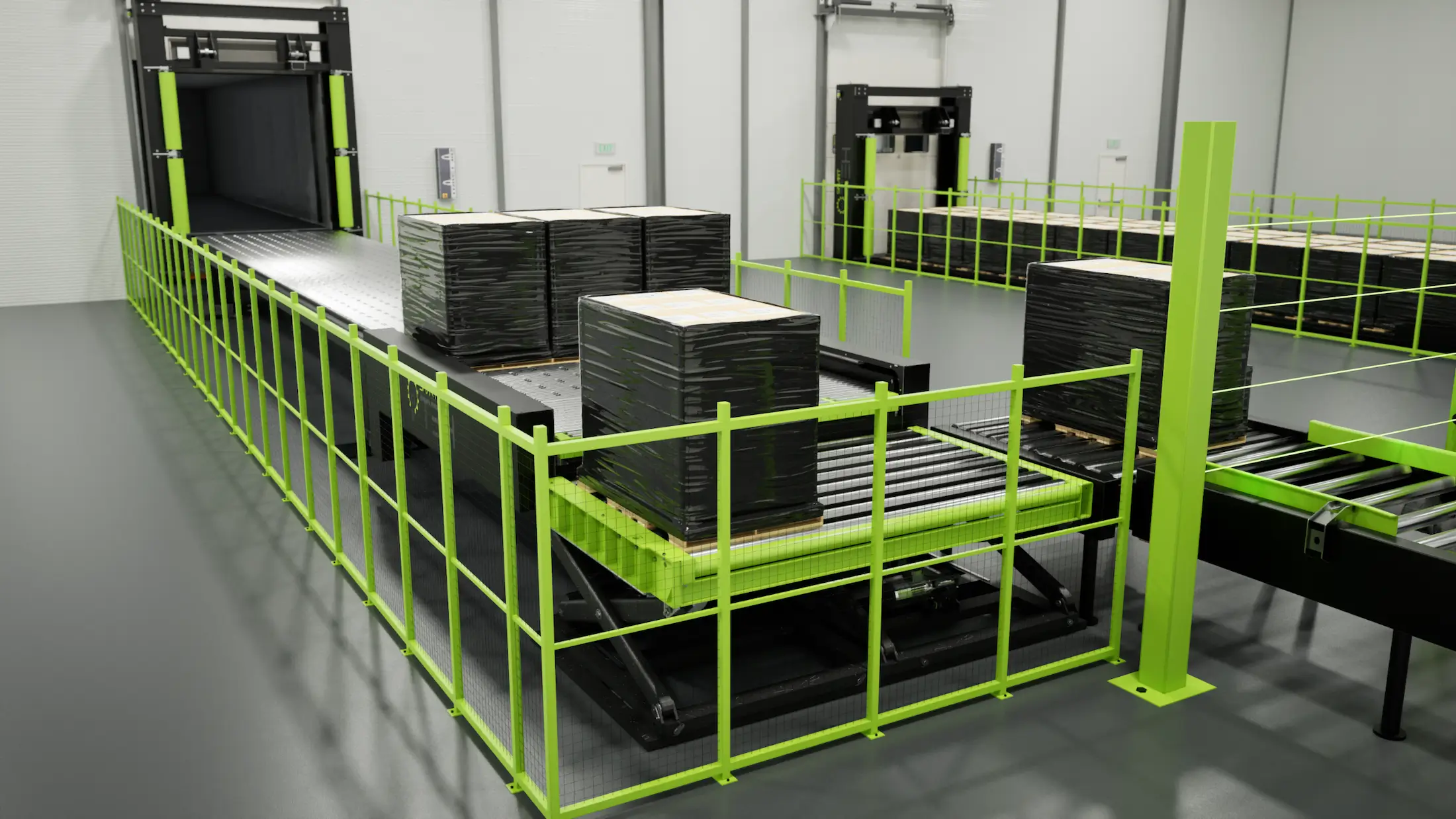
The RollerPlate lets you prepare cargo in advance and then automatically transfer all goods into the trailer in five minutes.
- Load full trucks in minutes instead of hours
- Reduce overall logistics and handling costs
- Work with all standard, non-modified trailers
- Minimize product damage through controlled cargo handling
Find out more
Automated Truck Loading and Unloading System | Telefork®
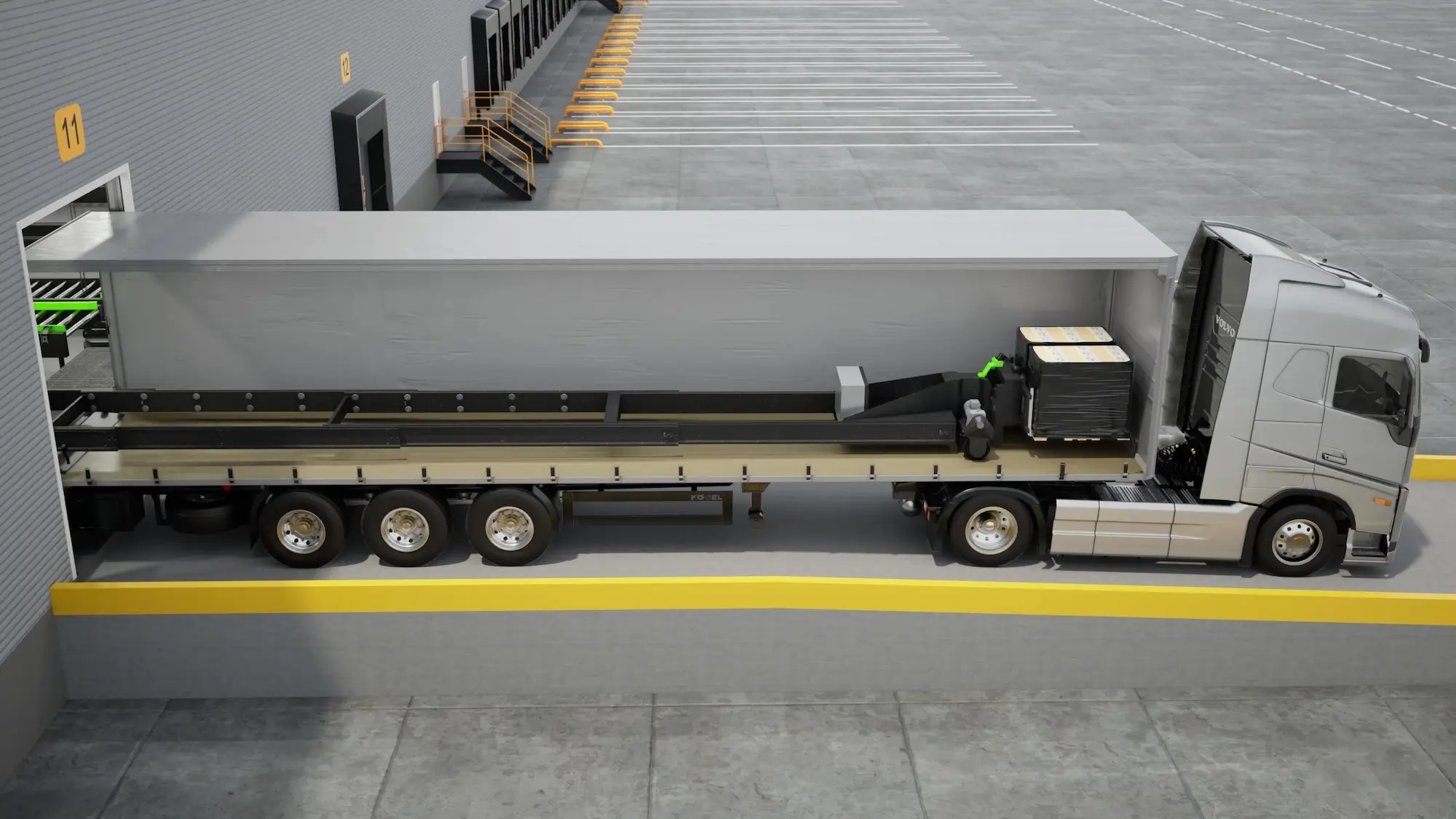
Telefork offers fully automatic truck loading and unloading, helping you move palletized goods faster, safer, and more efficiently.
- Load and unload trailers in 30 minutes
- Eliminate forklifts and manual handling
- Improve cargo safety and handling precision
- Integrate with AS/RS and other warehouse systems
See how it works
Is it time to make the switch?
Switching to automated loading is not a decision you want to make too early – or sit on for too long. The businesses that regret automating are usually the ones that jumped in before the volume was there to justify it. The ones that regret waiting are usually the ones that kept hiring to solve what was really an efficiency problem.
If your labor costs are climbing, your dock is slowing you down, and keeping reliable staff is getting harder, the case for automation is probably stronger than it feels. If you're not there yet, manual loading is a perfectly sensible choice – keep costs lean and revisit when your volume grows.
But if the pressure is already building on your team, your schedules, or your margins, the numbers in this article are probably telling you something.