Sandwich panels: Best practices for storage, handling, and transport
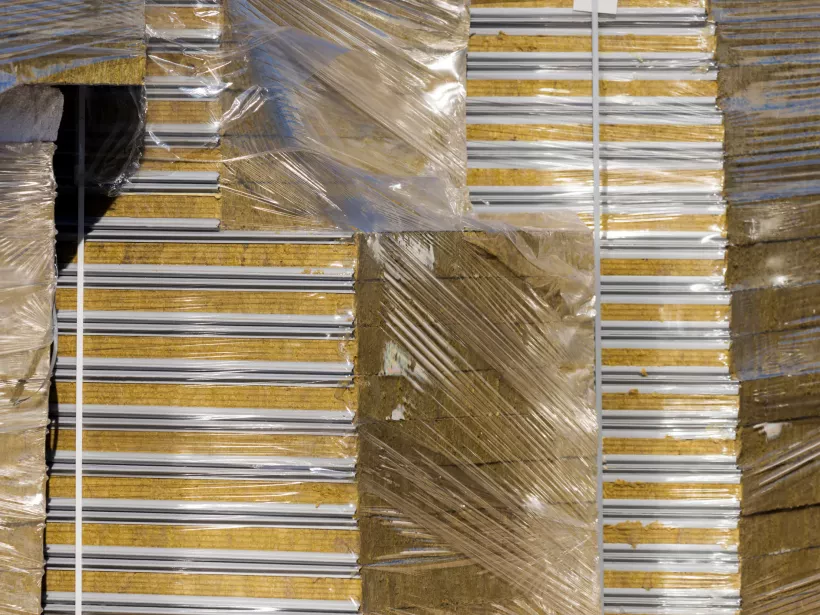
Sandwich panels are a popular construction product for their strength, high thermal insulation, and efficiency. Built with two layers of metal outer sheets and an insulating foam core, they offer excellent thermal performance while remaining lightweight and quick to install.
They’re commonly used as wall and roof panels, interior partitions, and ceilings in industrial buildings, warehouses, cold storage facilities, and commercial structures. However, their performance depends not just on production quality, but also on proper storage, handling, and transport.
Improper stacking, exposure to moisture, or careless loading can lead to surface damage, deformation, or reduced insulation performance – all of which can increase costs, extend construction time, and create project delays.
In this article, we’ll walk through practical tips to help you protect panel quality, improve safety, and ensure efficient logistics from the warehouse to final installation.
- Store properly: Clean, dry storage and correct stacking prevent bending, surface damage, and insulation loss.
- Handle with care: Support and lift properly using forklifts, lifters, or clamps, and follow material-specific practices.
- Plan loading in advance: Correct positioning, support, and securing prevent movement and deformation during transit.
- Protect during transport: Keep panels safe by choosing the right vehicle, using covers, and spreading weight evenly.
- Inspect and unload safely: Early checks and controlled unloading catch issues before installation delays occur.
Correct storage of sandwich panels
Follow these practices to prevent moisture damage, panel deformation, and surface scratches during storage.
Keep panels in the right environment
Store sandwich panels in clean, dry facilities to prevent moisture from damaging the core or metal facings. Keep them on a flat, stable surface to prevent bending, and avoid extreme temperature changes to preserve thermal insulation and protective coating.
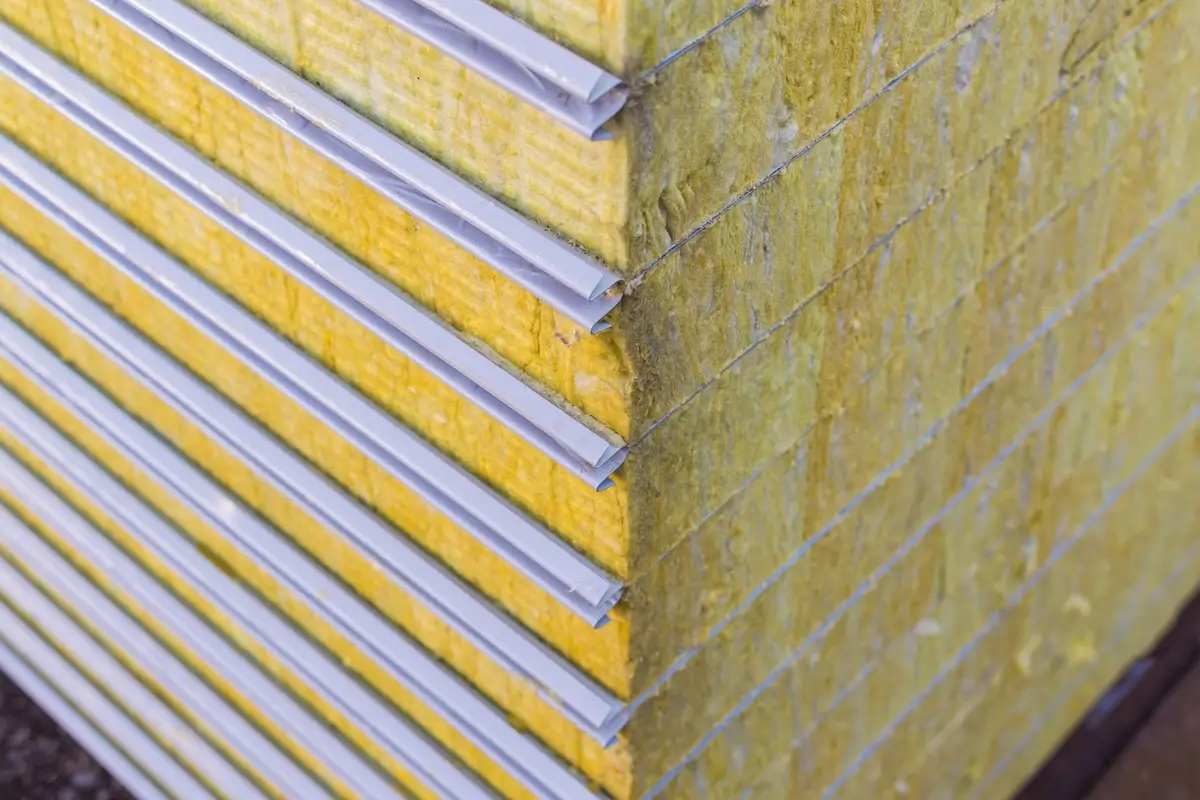
Stack panels correctly
To avoid warping, surface scratches, or pressure marks, stack panels uniformly, fully supported along their length, and aligned to distribute weight evenly.
Avoid over-stacking, and consider panel thickness and core density to prevent deformation.
Use protective measures
Whenever possible, store panels on pallets or wood supports. Spacers between stacks improve stability, while protective covers shield panels from dust, direct sunlight, and accidental damage.
Tip: Follow a first-in, first-out approach so panels aren’t left sitting under weight for too long.
Safe sandwich panel handling practices
Handling dos and don’ts
| DOs | DON'Ts |
|
|
Handling considerations by panel type
Different core materials react differently to handling pressure:
- Polyisocyanurate (PIR) and polyurethane (PUR) panels: Lightweight and sensitive to point loads – always support them across their length.
- Mineral wool panels: Heavier and more rigid – require stable lifting and careful alignment.
- Thicker panels (regardless of core type): More prone to edge compression if gripped incorrectly.
Common handling-related damage to watch for
Some handling effects may not be immediately visible but can impact performance later:
- Micro-dents in metal facings that later lead to corrosion
- Core compression from uneven lifting reduces insulation performance
- Edge deformation that complicates installation and sealing
- Slight bowing that only becomes visible during installation
Tip: Standardize lifting points, approved equipment, and maximum stack heights to reduce hidden damage.
Efficient sandwich panel loading techniques
Loading is where your preparation really shows. Panels need to be positioned, supported, and secured correctly to prevent movement, surface damage, and delays.
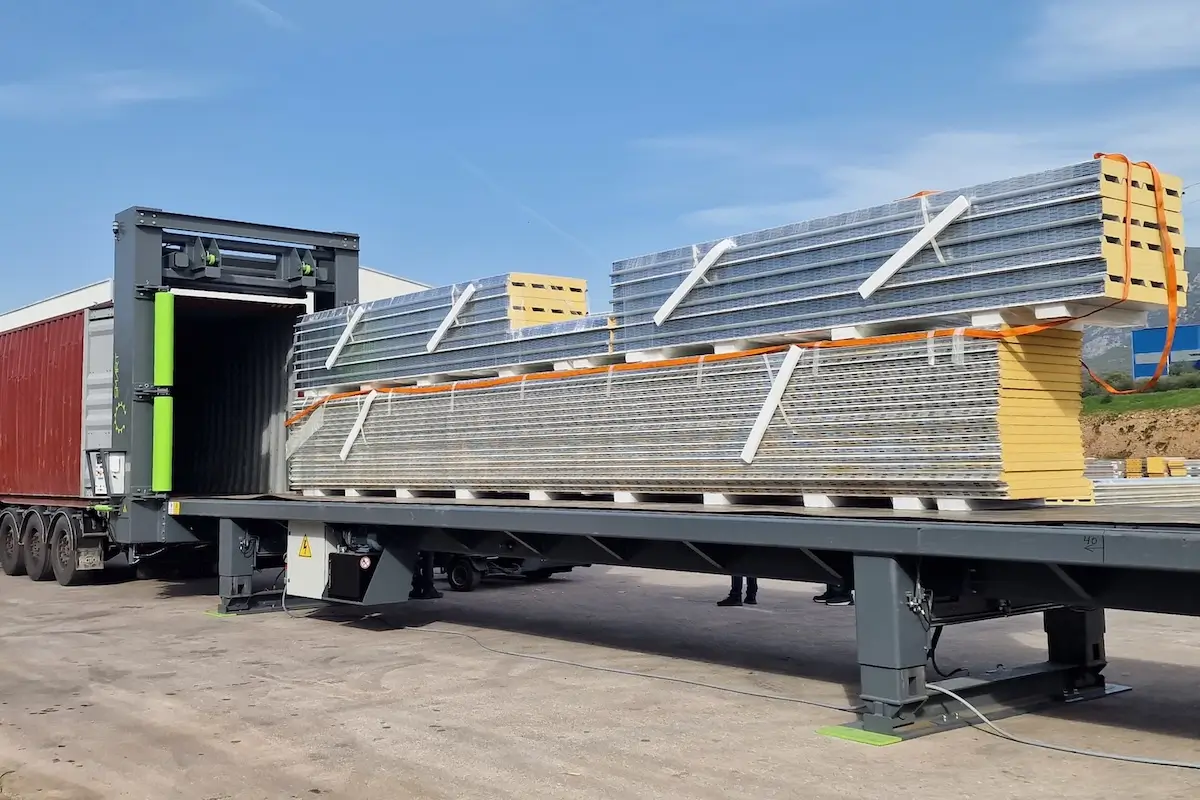
Plan the load before you start
Measure panel dimensions, confirm quantities, and plan their arrangement in the truck or container. Ensure weight is distributed evenly to avoid bending during transit.
Secure the panels to prevent movement
Use pallets, straps, and protective layers such as foam or timber spacers to keep panels stable and separated where needed. The goal is a single, stable load rather than loose individual panels.
Use loading equipment for consistency
Automated loading systems help load sandwich panels more evenly, minimize product damage, and reduce operational costs. This is especially useful when handling large volumes or oversized panels, where consistent loading helps protect product quality and keep the supply chain running smoothly.
Tip: Leave slight clearance between the panels and container doors and sides to prevent rubbing or impact damage.

Sandwich panel transport considerations
The right vehicle, proper protection, and stable transit conditions ensure panels arrive for construction without damage or rework.
Choose the right vehicle for the job
Transport should match panel size, volume, and delivery distance to ensure proper support throughout the journey.
| Transport method | Best used when | Key advantages | Things to consider |
| Flatbed truck | Large panels, short-to-medium distances, direct site delivery | Easy side loading/unloading, ideal for oversized panels | Requires careful securing and weather protection |
| Curtainsider trucks | Regional deliveries where panels need partial protection | Faster access while offering some shielding from the weather | Ensure proper internal securing to prevent shifting |
| Shipping container | Long-distance or export transport | Full enclosure protects from weather and debris | Requires precise loading to maximize space and avoid movement |
| Extendable trailer | Extra-long or custom-length panels | Accommodates non-standard dimensions | Needs detailed route planning and secure support |
Protect panels from environmental exposure
Use waterproof covers, sealed containers, or protective wrapping to guard against moisture, sun, and debris. Water ingress or condensation can affect thermal insulation performance, while UV exposure may degrade protective coatings.
Ensure coverings are tightly secured to prevent flapping and surface abrasion.
Manage conditions during transit
Excessive vibration, sudden braking, or uneven weight distribution can lead to deformation or surface defects.
To reduce risk:
- Distribute loads evenly and support panels along their full length
- Use spacers or anti-slip materials to limit vibration and friction
- Avoid stacking methods that concentrate weight in small areas
- Work with logistics providers familiar with transporting large-format building materials
Tip: Design the load in reverse order of installation for faster and safer unloading.
Panel quality checks and best practices on arrival
Arrival is the final control point to verify that panels have remained stable throughout the logistics chain. A quick, structured check helps catch issues early, when they’re easiest to resolve.
Inspect panels before unloading
As soon as the shipment is opened, look for signs of movement – shifted stacks, loose straps, or damaged packaging. Then check individual panels for scratches, dents, moisture, or any signs of bowing and deformation.
Do this before panels are spread across the site, as it becomes harder to trace damage once they’re installed.
Record and report issues immediately
Document any damage with photos and panel IDs, and notify the supplier or logistics provider. Early reporting prevents disputes and speeds up replacements, avoiding construction delays.
Use proper unloading methods
Support panels evenly and don’t drag them to avoid flexing. Use an automated unloading plate, forks, slings, or lifters positioned to distribute weight correctly – especially for longer panels. Prepare the unloading area in advance with supports and a clear, level surface.
Tip: Treat delivery day as a quality checkpoint, not just a handover. A 10-minute inspection and careful unloading can save time, money, and headaches later.
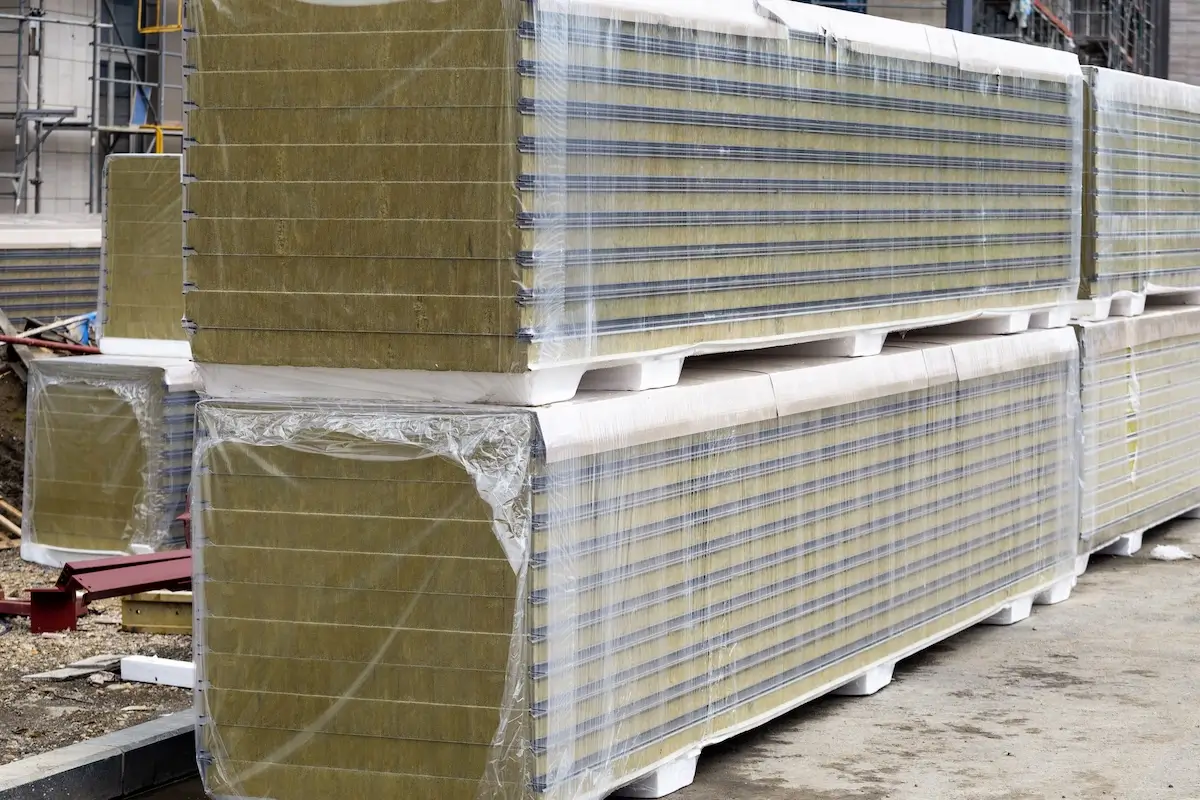
From warehouse to worksite: Protect sandwich panel performance at every step
Sandwich panels are precision products, and how they’re handled before installation matters just as much as how they’re installed. Plan loads, handle consistently, secure properly, and inspect on arrival. These steps aren’t extra precautions – they’re essential for a smooth build.
When logistics are treated with the same care as installation, panels arrive ready to use, schedules stay on track, and costly rework is avoided.